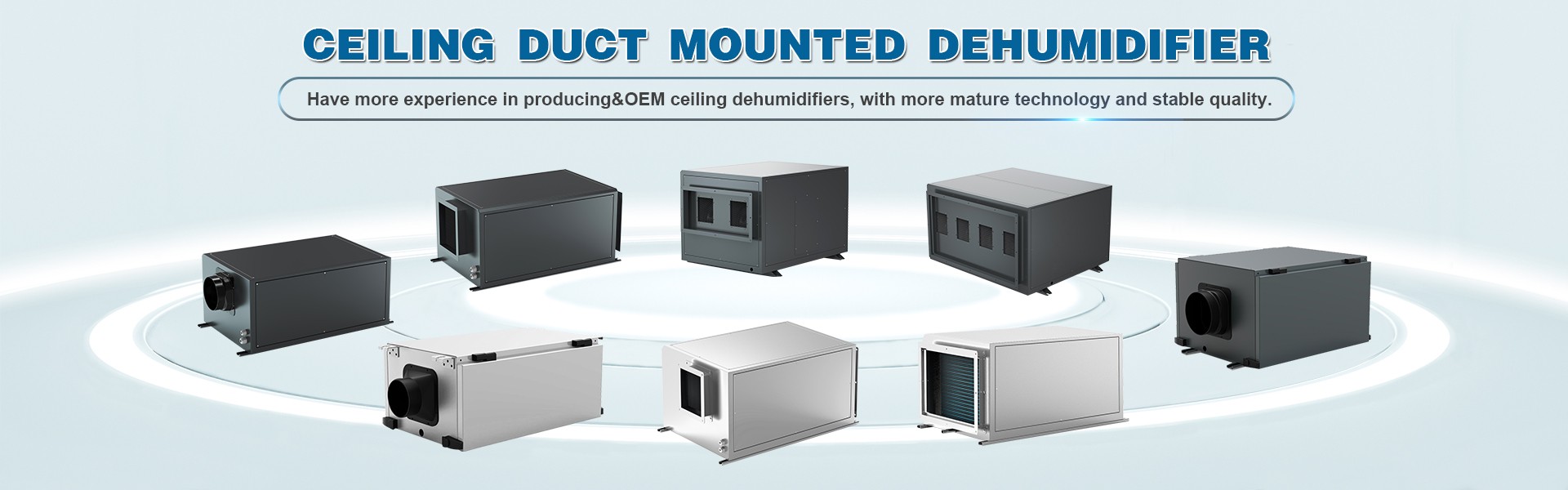
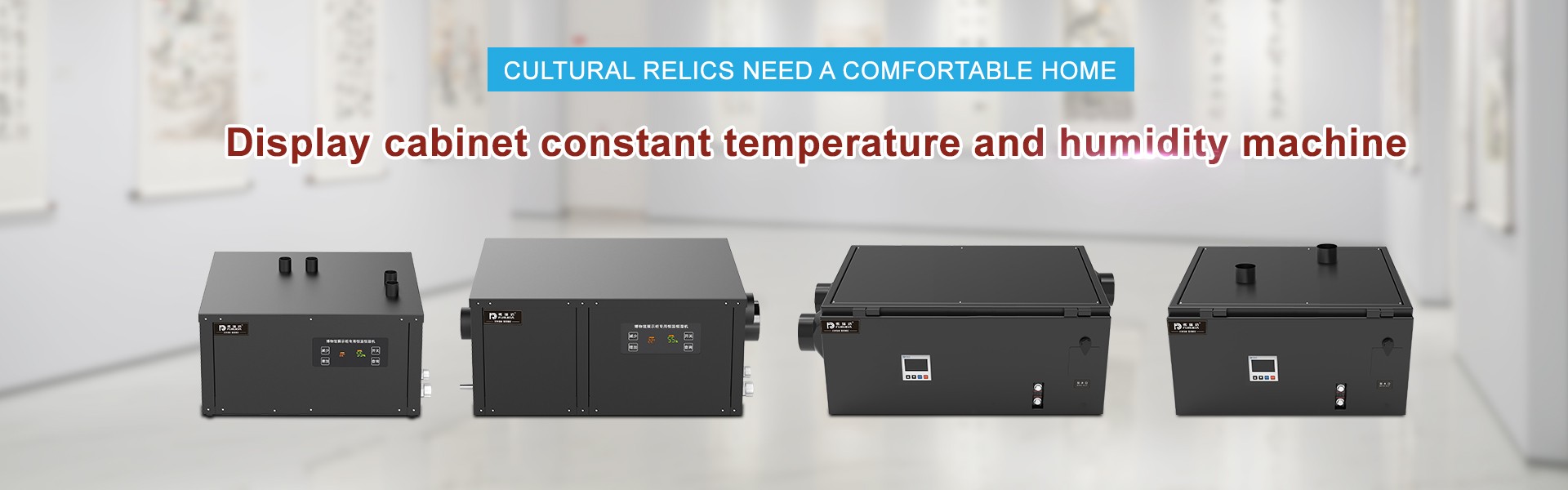
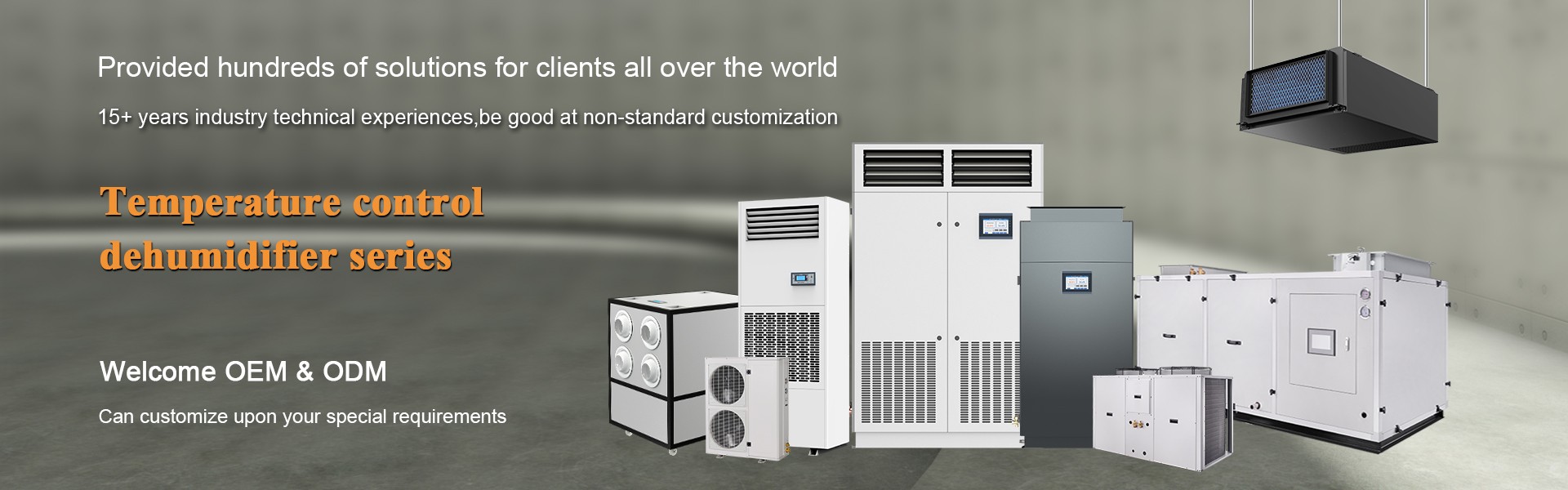
In high-end industrial applications such as precision manufacturing, pharmaceutical warehousing, and the defense and aerospace sectors, the precision of air environment parameter control directly determines product yield and equipment lifespan. Traditional ventilation or heat-based dehumidification methods often face the dilemma of “condensation when cooling and high energy consumption when heating.” Industrial-grade integrated refrigeration and dehumidification units, however, have emerged as a model solution to this dilemma thanks to their technical architecture that deeply couples the “compressor refrigeration cycle” with “condensation dehumidification.” This article will start from the fundamental principles of thermodynamics to dissect the synergistic mechanisms of its core components and compare the essential technical differences with desiccant wheel dehumidifiers and residential dehumidifiers.
I. Technical Core: The Physical Foundation of Temperature-Humidity Decoupling
The core design philosophy of industrial refrigeration-dehumidification integrated units lies in actively breaking the linear relationship between the partial pressure of water vapor in the air and temperature. The implementation approach is not simply “cooling to remove moisture,” but rather creating an artificial low-temperature cold trap through the refrigeration cycle. This forces the temperature of the humid air flowing over the surface to drop sharply below its dew point, causing the water vapor to undergo a phase change, condense into liquid water, and be discharged. At the same time, the system does not simply waste cooling capacity; instead, it uses heat recovery and reheat temperature control technologies to adjust the deeply cooled “over-dry cold air” to the supply air temperature required by the process, thereby achieving simultaneous and controllable cooling and dehumidification.
II. The Logic of Industrial Synergy Among Core Components
While industrial-grade systems and ordinary refrigeration equipment may appear similar in terms of component functions, there are fundamental differences in their control depth and response strategies.
1. Evaporator: The “Condensation Battlefield” at Low Dew Points
In industrial all-in-one units, the evaporator is not a simple copper-tube-and-aluminum-fin heat exchanger, but rather a high-efficiency heat exchange core optimized with a hydrophilic coating and optimized fin spacing. When high-temperature, high-humidity process return air (typically ranging from 35°C to 50°C) passes through the evaporator coils at high air pressure, the coil surface temperature is maintained at approximately 2°C to 8°C by the heat absorbed during refrigerant evaporation. This temperature is far below the air’s dew point, forcing large amounts of condensate to form a continuous water film on the fin surfaces, which then rapidly slides into the drip pan.
Key Industrial Synergy: The superheat of the evaporator is not a constant value. Under variable load conditions, the electronic expansion valve dynamically adjusts the refrigerant flow rate to ensure that the superheat of the refrigerant at the evaporator outlet is maintained within a very narrow range. This prevents “liquid compression” from damaging the compressor while ensuring that the coils remain within the high-efficiency condensation temperature range throughout the entire process, thereby avoiding localized ice blockages or a sudden drop in dehumidification efficiency.
2. Compressor and Expansion Valve: The “Precision Regulators” of Cooling Capacity
The compressor is the heart of the system, but in industrial applications, it primarily functions as a “variable-power actuator.” Through variable-frequency drive technology, the compressor can linearly adjust its displacement based on real-time feedback from return air temperature and humidity sensors, thereby altering the high-pressure and low-pressure differential across the entire refrigeration cycle.
The expansion valve acts as the “brain of refrigerant distribution,” throttling high-pressure liquid refrigerant to reduce its pressure and transform it into a low-temperature, low-pressure mixture of gas and liquid. Electronic expansion valves (EEVs) are commonly used in industrial systems to replace thermal expansion valves; their opening adjustment speed can reach the millisecond range, enabling precise control of the refrigerant injection into the evaporator based on real-time deviations in evaporator outlet temperature and suction pressure. This synergy ensures that the evaporator surface remains stable near the set dew point temperature even during sudden drops in ambient temperature or abrupt changes in heat load, eliminating the “humidity runaway caused by temperature fluctuations” commonly seen in residential units.
3. Condenser: A “Dual-Function Hub” for Waste Heat Recovery and Reheating Temperature Control
This is the most critical aspect that distinguishes industrial refrigeration and dehumidification integrated units from ordinary equipment. Traditional residential dehumidifiers place the condenser after the evaporator, using the condensation heat to directly reheat the dehumidified cold air, resulting in excessively high outlet air temperatures. In contrast, industrial-grade systems divide the condenser into functional zones: the main condensing section dissipates the compression heat from the refrigeration cycle to the outdoors or into cooling water; the reheat condensing section is connected in series to the air outlet side of the evaporator.
The dry air, which has been deeply cooled by the evaporator (to below 10°C), flows through the reheat condenser, where it absorbs the sensible heat released by the condensing refrigerant, precisely raising its temperature to the supply air value required by the process (e.g., 22°C ± 0.5°C). This process achieves two major objectives: first, it recovers waste heat, improving the unit’s overall energy efficiency ratio; second, it reduces the relative humidity of the supply air, because although the moisture content of the heated air remains unchanged, its relative humidity drops significantly, thereby enhancing its moisture-absorption capacity and creating a kinetic advantage for dehumidification in the next cycle.
III. Comparison of Technical Differences: Why Industrial-Grade Units Cannot Simply Be Substituted
To truly understand the value of industrial refrigeration-dehumidification combination units, they must be evaluated in comparison with traditional desiccant dehumidifiers and residential dehumidifiers.
1. Comparison with Rotor Dehumidification Technology: Physical Limits vs. Chemical Adsorption
Rotor dehumidification relies on solid adsorbents (such as silica gel and molecular sieves) to physically adsorb water vapor. Its advantage lies in its ability to achieve extremely low dew point temperatures (down to -40°C or even lower) and its immunity to ambient temperature fluctuations. However, its fatal flaw lies in the high energy consumption required for regeneration—it necessitates continuous heating with hot air at 120°C–140°C to desorb moisture, and the rotor drive and heating processes contribute almost no cooling effect. In production lines where both temperature and humidity must be controlled simultaneously, rotor systems require additional chillers to be installed in parallel, resulting in a significant increase in floor space and initial investment.
2. Comparison with Residential Dehumidifiers: Fixed-Frequency On/Off Operation vs. Precise Matching Across All Operating Conditions
Residential dehumidifiers typically use capillary tube throttling and fixed-frequency compressors, causing the evaporation temperature to drift passively with ambient temperature. When the ambient temperature falls below 18°C, frost easily forms on the evaporator surface, causing the system to frequently cycle on and off for defrosting, which leads to a sharp decline in dehumidification capacity; when the ambient temperature exceeds 32°C, excessively high condensing pressure can easily trigger overload protection.
IV. Conclusion
The essence of an industrial-grade integrated refrigeration and dehumidification unit is not a simple stacking of refrigeration components and a fan unit, but rather a systematic engineering effort involving the in-depth redistribution of latent and sensible heat within the thermodynamic cycle. It utilizes the evaporator as a “moisture trap” and the condenser as a “heat pump source.” Through millisecond-level coordination between the expansion valve and the compressor, it consistently maintains the humidity and temperature of the airflow within a narrow setpoint window, even under the wide temperature range and fluctuating load conditions typical of industrial environments.
Compared to the high energy consumption of rotary dehumidification and the low reliability of residential dehumidification systems, this technological approach demonstrates indisputable advantages in overall energy efficiency and temperature control precision within the application range of low-to-medium temperatures (10°C–30°C) and low-to-medium dew points (2°C–15°C). Understanding the logic behind this synergy involves more than simply interpreting an enthalpy-humidity diagram; it means grasping the key to the technological leap in modern industrial environmental control—the transition from “coarse cooling” to “precise regulation.” For operations and maintenance engineers, focusing on these three core parameters—evaporator superheat, condenser reheat distribution ratio, and expansion valve response speed—is the key to ensuring the stable operation of this complex system.
 vivienhu0427@hotmail.com
 +86 15958041362
 vivien@hzfreeair.com