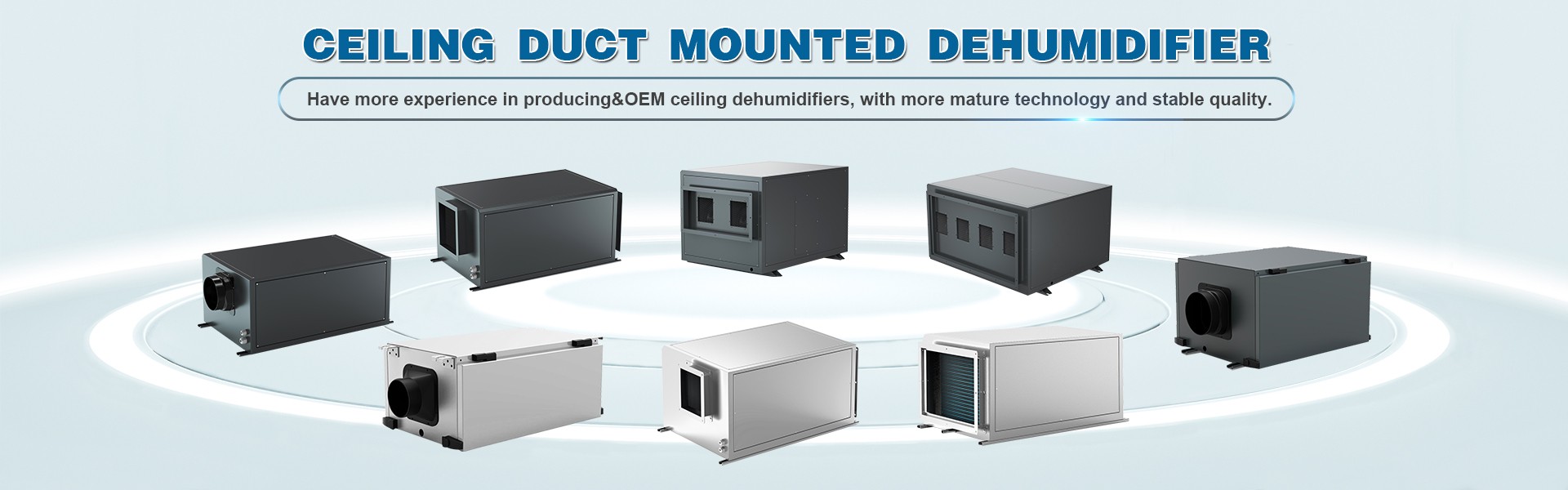
Facing the Harsh Challenge of “Baking Above and Steaming Below”
In modern buildings, ceiling-mounted air conditioning units are widely used in laboratories, wine cellars, cleanrooms, and other facilities with strict temperature and humidity requirements due to their space-saving design and ease of concealed installation. However, the installation environments in these locations are often far from ideal—laboratories on the top floors of buildings face scorching sunlight in summer, causing temperatures in the ceiling cavity to soar; while wine cellars deep underground are cold and damp in winter, leaving equipment in a prolonged state of low-temperature standby.
When ambient temperatures deviate from the standard comfort range, conventional air conditioning equipment often struggles to perform: in high-temperature environments, condensing pressure soars, causing a significant decline in cooling capacity; in low-temperature environments, lubricant viscosity increases, making it difficult for compressors to start or even leading to damage. Ensuring that ceiling-mounted units consistently deliver stable and reliable temperature and humidity control across a wide ambient temperature range of -5°C to 45°C has become a key benchmark for evaluating equipment quality.
High-Temperature Conditions: Three Lines of Defense Against Performance Degradation
When ceiling-mounted units are installed on top floors or in poorly ventilated, cramped crawl spaces, summer ambient temperatures can easily exceed 40°C, causing condenser cooling conditions to deteriorate rapidly. At this point, the equipment faces two core challenges: first, excessively high compressor discharge temperatures leading to protective shutdowns; second, a significant drop in cooling capacity as condensing pressure rises.
To address high-temperature performance degradation, reliable design is first reflected in the redundancy of the condensing system. By appropriately increasing the heat exchange area of the condenser and optimizing the airflow path design, the unit maintains sufficient subcooling even in 45°C environments. This prevents refrigerant from entering the throttling stage before fully liquefying at the condenser outlet, thereby ensuring that cooling efficiency remains uncompromised. At the same time, key electrical components are specified for wide temperature ranges to ensure that control boards and relays do not experience electrical drift or thermal failure in prolonged high-temperature environments.
Further protection comes from a wide-voltage design. During summer peak power hours, grid voltage fluctuates frequently; particularly in older buildings or remote areas, voltage may drop below 180V. The core of the wide-voltage design lies in the coordinated optimization of the switching power supply and the compressor drive circuit—even at low voltages, the control circuit can still stably supply power to sensors and actuators, while the compressor maintains torque output within the permissible voltage range, preventing frequent start-stops or protective shutdowns caused by sudden voltage drops. This design ensures that the unit maintains continuous temperature and humidity output within a voltage fluctuation range of ±15% or even wider.
Low-Temperature Conditions: Core Technology for Overcoming Startup Challenges
In underground wine cellars, cold storage buffer rooms, or equipment mezzanines in northern regions, ambient temperatures may drop below freezing during winter when heating is not in operation. Starting a compressor directly under low-temperature conditions poses significant risks for standard air conditioners: low temperatures cause refrigerant to migrate into the compressor housing, and during startup, a large amount of liquid refrigerant surges into the cylinder, easily causing liquid hammer damage; simultaneously, the viscosity of the refrigeration oil increases dramatically at low temperatures, leading to insufficient lubrication at the moment of startup and accelerating wear on moving parts.
The core component for solving this problem is the compressor crankcase heating strip. This device remains powered while the compressor is idle, continuously heating the bottom of the crankcase with a power output ranging from a few watts to tens of watts. This ensures the internal temperature remains above the ambient dew point, thereby maintaining the fluidity of the refrigeration oil. Specifically, the crankcase heater serves a dual purpose: First, it prevents refrigerant from condensing and dissolving into the lubricating oil during shutdown, thereby avoiding dilution of the oil and a reduction in oil film strength during startup; Second, by maintaining oil temperature, it reduces oil viscosity resistance during startup, thereby lowering the peak startup current. When the unit needs to start, the controller first detects the temperature difference between the crankcase and the ambient environment; only after the heating strip has preheated for a sufficient period is the compressor permitted to power on and run.
Anti-Freeze Logic: The Ultimate Line of Defense for Intelligent Protection
In addition to extreme high- and low-temperature conditions, ceiling-mounted units face a specific risk during cooling operation: freezing and ice buildup on the evaporator. When ambient temperatures are low (e.g., near 0°C) and the user still requires cooling operation, the surface temperature of the evaporator may drop below freezing. Condensate rapidly freezes and gradually accumulates as ice, eventually blocking the gaps between the fins. This leads to a sudden drop in airflow and cooling failure; in severe cases, it can even cause the heat exchanger coils to burst.
The anti-icing logic is an intelligent control strategy designed specifically to address this issue. Through the coordinated operation of multiple sensors—including the evaporator coil temperature sensor, ambient temperature sensor, and return air temperature sensor—the controller monitors the risk of frost formation in real time. When the coil temperature remains below a set threshold (e.g., 2°C) for a specified duration, the system does not blindly continue cooling but triggers protective actions: either pausing the compressor and increasing fan speed to accelerate defrosting, or temporarily switching to heating mode (if the unit has heat pump functionality), resuming cooling only after the coil temperature returns to a safe range. More advanced logic can even predict frosting risks based on trends in ambient temperature, proactively adjusting the expansion valve opening and compressor frequency to prevent excessive frosting while maximizing the continuity of cooling output.
A Reliable Commitment Across a Wide Temperature Range
From sun-drenched laboratories on top floors to damp, chilly wine cellars underground, and from the scorching 45°C heat of summer to the biting cold of -5°C in winter, modern ceiling-mounted units establish a robust reliability defense through three core technologies: wide-voltage design, compressor crankcase heating strips, and anti-freeze logic. These technologies are not merely a collection of features, but rather stem from the deep integration of thermodynamic principles, fluid control, and intelligent algorithms, providing precise protection for every vulnerable point under extreme operating conditions.
When equipment can deliver consistent, stable temperature and humidity control even under such harsh boundary conditions, users gain more than just the promises on a spec sheet; they receive a reliable safeguard for precision experiments, aged fine wines, or high-value production processes. This is precisely the path HVAC technology must take to achieve greater precision and high reliability.
 vivienhu0427@hotmail.com
 +86 15958041362
 vivien@hzfreeair.com