
Desiccant dehumidifiers, with their highly efficient and stable dehumidification performance, have demonstrated irreplaceable
value across various industries. Unlike traditional condensation-based dehumidification technologies, desiccant dehumidifiers
excel particularly in low-temperature, low-humidity environments and are temperature-sensitive, providing ideal solutions for
numerous scenarios with stringent humidity requirements. This article delves into key applications of desiccant dehumidifiers
in industrial production, commercial spaces, and high-end residential environments, while providing corresponding selection guidance.
I. Industrial Production: Precise Humidity Control to Safeguard Core Processes
Within modern industrial systems, humidity often ranks among the core parameters affecting product quality, production safety,
and process flow.
High-Standard Manufacturing Facilities (e.g., Lithium Battery Production, Precision Electronics)
Application Requirements: These environments demand extremely strict humidity control, typically requiring maintenance at
extremely low dew point temperatures (e.g., -40°C or lower). Trace moisture can cause battery electrolyte degradation, oxidation
of electronic components, or failure of precision instruments.
Application Highlights: Desiccant dehumidifiers deliver stable, ultra-low humidity dry air. Integrated with ventilation systems,
they sustain ultra-low humidity conditions throughout entire workshops or localized dry zones (e.g., drying chambers, glove boxes),
serving as critical equipment for ensuring high product consistency and yield rates.
Pharmaceutical and Food Warehouses
Scenario Requirements: Raw materials and finished products (e.g., pharmaceutical powders, capsules, milk powder) readily absorb
moisture, leading to caking, degradation, or microbial growth. These environments require year-round constant low humidity.
Application Highlights: Desiccant dehumidifiers operate efficiently regardless of ambient temperature, delivering effective
dehumidification even in low-temperature storage facilities. They preserve product potency, shelf life, and safety while meeting
GMP and other regulatory standards.
Chemical and Military Industries
Scenario Requirements: Many chemical raw materials and military supplies (e.g., gunpowder, ammunition) are highly humidity-sensitive.
Excessive moisture may cause performance degradation or even trigger safety incidents.
Application Highlights: Equipment must provide absolutely reliable continuous dehumidification to prevent any form of condensation,
ensuring absolute safety throughout storage and production processes.
II. Commercial and Public Spaces: Creating Comfort, Safeguarding Treasures
In commercial operations, humidity control impacts user experience, asset preservation, and operational costs.
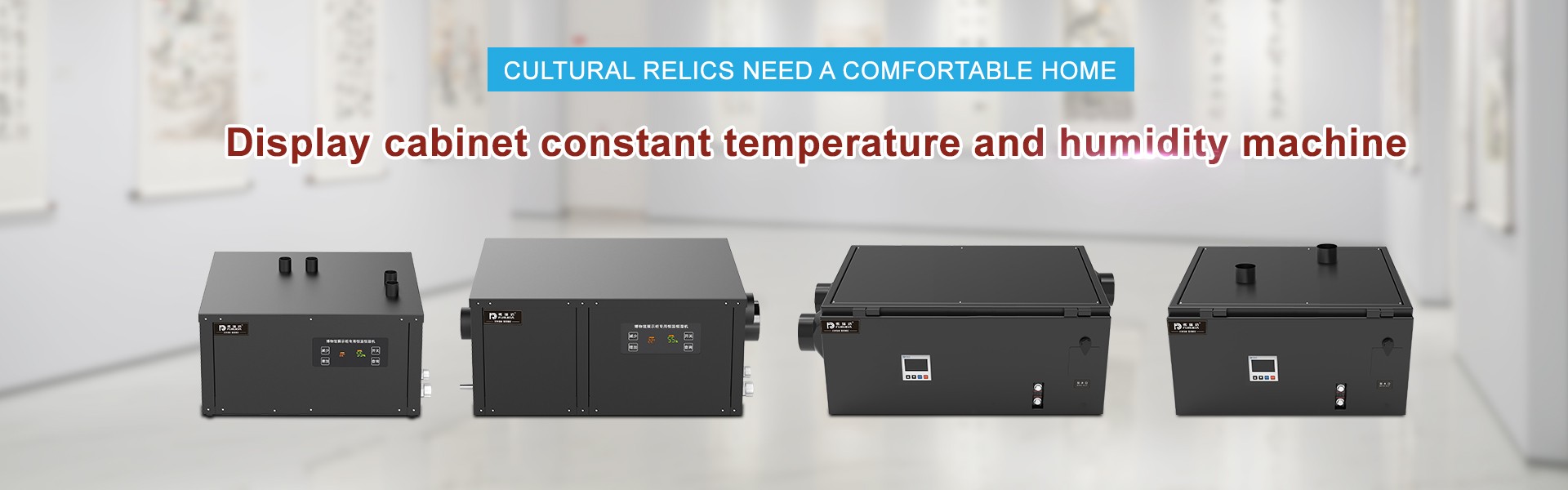
Archives, Libraries, and Museums
Scenario Requirements: Collections like paper, silk, ancient texts, and film are highly sensitive to humidity fluctuations. Excessive
humidity causes mold growth and hydrolysis; insufficient humidity leads to material brittleness. Consistent humidity levels (typically
45%-60% RH) must be maintained year-round.
Application Highlights: Desiccant dehumidifiers provide precise humidity control and stable winter operation, delivering a
worry-free preservation environment for precious cultural heritage.
Indoor Swimming Pools & Spa Facilities
Scenario Requirements: High-temperature, high-humidity environments cause significant moisture condensation, leading to
wall corrosion, glass fogging, metal rust, and mold growth that compromises health and comfort.
Application Highlights: Desiccant dehumidifiers offer a professional solution for pool humidity challenges. Beyond efficient
moisture removal, the heat generated during regeneration can be utilized for pool water heating or space warming, enabling
energy recycling and significant energy savings.
Underground Malls & Parking Garages
Scenario Needs: Poor ventilation in underground spaces often creates cold, damp conditions with musty odors, negatively
impacting commercial ambiance, equipment lifespan, and human health.
Application Highlights: Installing desiccant dehumidifiers effectively reduces air humidity, prevents condensation, maintains
a dry and fresh environment, and enhances space quality.
III. Premium Residential Environments: Elevating Quality, Promoting Healthy Living
As demands for living environments rise, desiccant dehumidifiers are increasingly adopted in high-end residences.
Villa Basements, Private Wine Cellars
Scenario Needs: Basements are typically damp, prone to mold and strong odors, rendering them underutilized. Wine cellars
require stable temperature and humidity (e.g., 12-14°C, 65-75% RH) to ensure proper aging.
Application Highlights: Desiccant dehumidifiers completely resolve basement dampness, transforming these spaces into
comfortable gyms, home theaters, and more. Specialized models deliver precise constant temperature and humidity control
for wine cellars.
Constant Climate Technology Homes
Scenario Needs: Pursuing year-round spring-like indoor climate with comprehensive control over temperature, humidity, air
purity, and noise levels to provide ultimate living comfort and health assurance.
Application Highlights: As a vital component of integrated environmental control systems, desiccant dehumidifiers coordinate
with fresh air and HVAC systems to achieve independent, precise humidity regulation, avoiding the excessive cooling issues
caused by conventional air conditioning dehumidification.
Collectibles Storage Rooms
Scenario Requirements: Designed for storing items with strict humidity requirements, such as fine art, musical instruments,
cameras, and cigars, these spaces demand a stable, optimal microclimate.
Application Highlights: Compact desiccant dehumidifiers or dehumidification cabinets deliver professional storage conditions
for these treasures.
Selection and Application Recommendations
How to choose the right desiccant dehumidifier for diverse scenarios? Key considerations include:
Define Core Parameters: First determine the target humidity (dew point temperature) and spatial conditions (area, ceiling height,
initial humidity, temperature, airtightness, fresh air volume). This forms the basis for calculating the required dehumidification
capacity (liters/day).
Distinguish Process vs. Comfort Applications: Industrial production often demands extremely low humidity (process dehumidification),
requiring equipment with deep dehumidification capability and stability. Commercial and residential settings typically use comfort
dehumidification or item protection, necessitating balanced humidity control precision, low noise, aesthetic appeal, and smart
control features.
Focus on energy efficiency and thermal management: Desiccant dehumidifiers generate regeneration heat during operation. In
applications requiring heat retention (e.g., low-temperature workshops), this heat can be utilized; in cooling-intensive scenarios
(e.g., summer swimming pools), heat dissipation measures must be considered. Selecting high-efficiency models with heat recovery
capabilities significantly reduces operational energy consumption.
Prioritize system integration: Dehumidifiers are not standalone devices. Especially in large-scale projects, they must be holistically
designed with HVAC, fresh air, and purification systems to ensure optimal airflow organization and performance.
Evaluate maintenance and long-term operating costs: The desiccant wheel, as the core component, has a finite lifespan. Understand
its replacement cycle and associated costs. Additionally, select reliable brands (no specific examples provided) to ensure long-term
operational stability and after-sales service.
Conclusion
From safeguarding precision in cutting-edge industrial production to preserving the enduring legacy of humanity's cultural treasures,
and enhancing the health and comfort of modern homes, the application scope of desiccant wheel dehumidifiers continues to expand.
Understanding the fundamental requirements of diverse scenarios, coupled with scientific selection and system integration, unlocks the
full potential of this highly efficient dehumidification technology. It creates optimal environments—dry, stable, and healthy—both in
visible and unseen spaces.
 vivienhu0427@hotmail.com
 +86 15958041362
 vivien@hzfreeair.com