In modern architectural design that balances spatial aesthetics with functional efficiency, seamlessly integrating functional
equipment into building structures has become a critical challenge. As key devices for regulating indoor humidity and enhancing
living quality, dehumidifiers often pose design challenges due to their appearance and installation methods. Through concealed
customization solutions, we can achieve efficient dehumidification without disrupting the spatial integrity, allowing the equipment
to “disappear” within the building.
Ductwork Customization: Integrating Airflow into Architectural Flow
Traditional dehumidifiers are typically placed independently, occupying space and disrupting visual continuity. Custom
ductwork technology enables relocating the dehumidifier unit to secondary spaces, while a meticulously designed duct
system distributes the processed dry air throughout all rooms. The core of this solution lies in:
Integrated Duct Design: Planning duct paths during initial architectural design to seamlessly integrate with HVAC systems
and structural beams/columns
Uniform Airflow Distribution: Ensuring balanced humidity control in every space through computational fluid dynamics analysis
Concealed Vent Design: Integrating supply and return vents into wall finishes, baseboards, or furniture components for
visual invisibility
Centralized Machine Room Integration: The Smart Choice for Efficient Management
For large-scale spaces or multi-room humidity control needs, centralized dehumidification systems paired with integrated
machine room solutions deliver high efficiency:
Centralized Equipment Placement: Dehumidification units and other environmental control equipment are consolidated
within dedicated technical rooms.
Distributed Humidity Control: Ductwork connects individual spaces, enabling zone-specific humidity regulation.
Maintenance Convenience: All equipment resides in accessible areas, facilitating routine maintenance and repairs without
disrupting primary living zones.
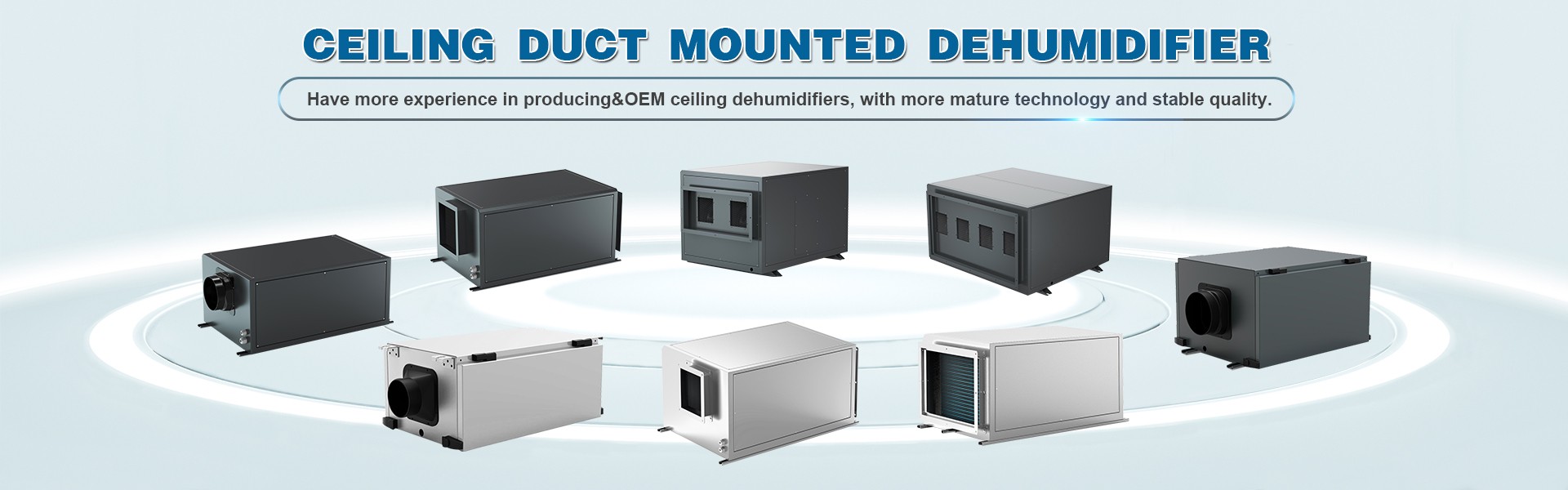
Ceiling Installation: Ingenious Utilization of Vertical Space
Installing dehumidification equipment within ceiling cavities is a common concealed solution in modern architecture:
Flush-Mount Installation: Utilizing ultra-thin units or custom dimensions for complete integration into ceiling structures
Noise Reduction: Incorporating acoustic insulation layers within ceilings to minimize operational noise transmission
Access Panel Design: Planning concealed service hatches to ensure maintainability without compromising aesthetics
Smart Integration: Invisible Environmental Control
The pinnacle of concealed dehumidification customization lies in seamless integration with building management systems:
Smart Control Systems: Incorporate humidity monitoring and regulation into the overall environmental management network
Adaptive Operation Modes: Automatically adjust operational strategies based on indoor/outdoor humidity fluctuations and
occupancy patterns
Energy Efficiency Optimization: Coordinate with HVAC and fresh air systems to reduce energy consumption
Implementation Challenges and Solutions
Integrating dehumidification equipment into building systems presents multiple challenges requiring multidisciplinary
collaboration:
Importance of Early Planning: Must be incorporated during initial architectural design, reserving space and interfaces
Cross-Disciplinary Collaboration: Requires close cooperation between architects, interior designers, MEP engineers, and
humidity control specialists
Maintenance Accessibility: Concealed equipment must remain fully serviceable for component inspection and replacement
Cost Balancing: Initial investment may be higher, but long-term returns are realized through enhanced space utilization,
aesthetics, and energy efficiency
Conclusion
The concealed customization of dehumidifiers represents not merely an installation innovation, but an evolution in architectural
thinking. When functional equipment truly integrates into the building fabric, we gain not only more aesthetically pleasing spaces,
but also more efficient and intelligent environmental control systems. This integrated solution represents the future trajectory of
architecture—technology serving life without intruding upon daily existence, ultimately achieving the ideal state where “equipment
remains invisible while functionality endures.”
Through professional design and integration, dehumidification equipment can transform from a space-consuming functional box
into an organic component of the building's environmental regulation system. It safeguards comfort and health invisibly, truly
realizing the harmonious coexistence of architecture, people, and the environment.
 vivienhu0427@hotmail.com
 +86 15958041362
 vivien@hzfreeair.com