In modern home and professional space environmental management, humidity and temperature remain two core factors
influencing comfort and the preservation quality of items. Traditionally, dehumidifiers and air conditioners each handled
their respective roles—regulating humidity and temperature—but their functions often overlapped without efficient coordination.
Today, a new technological trend is emerging: integrating high-precision temperature control into dehumidification equipment.
This enables dual intelligent regulation of both humidity and temperature through a single device, redefining environmental
control methods while unlocking new possibilities for enhancing energy efficiency and comfort.
From Separate to Integrated: The Evolutionary Logic of Technology
Traditionally, dehumidifiers primarily focused on removing excess moisture from the air without significantly altering temperature.
However, many conventional units inevitably release heat during operation, raising ambient temperatures—particularly in summer
or enclosed spaces—potentially increasing the burden on cooling systems. Conversely, while air conditioners can lower temperatures,
their dehumidification process often involves excessive cooling, potentially creating damp, chilly, or uneven environments.
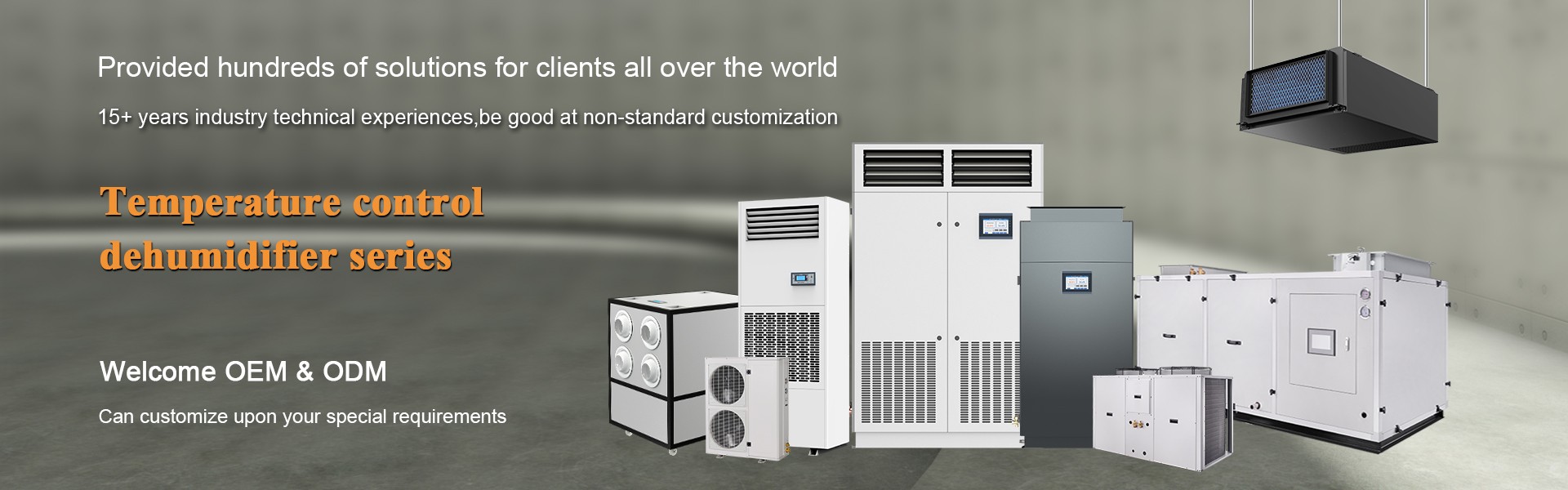
The emergence of intelligent dual-control technology addresses this contradiction. New-generation devices integrate high-precision
temperature sensors with smart control systems, treating dehumidification and temperature regulation not as separate tasks but as
interconnected dimensions within holistic environmental management. The system continuously monitors ambient humidity and
temperature, dynamically adjusting operating modes through algorithms. It simultaneously dehumidifies while precisely controlling
outlet air temperature or activating auxiliary heating/cooling, maintaining the environment within the user's ideal range.
Dual-Effect in One Unit: Achieving Intelligent Collaborative Control
Precise dual control of humidity and temperature hinges on integrating three key technological elements:
First, multi-sensor fusion. The unit continuously collects data via highly sensitive humidity and temperature sensors, creating a
real-time portrait of dynamic environmental changes.
Second, intelligent algorithm core. The built-in controller automatically calculates optimal operating strategies based on preset
targets and real-time data. For instance, during rainy seasons, the system efficiently dehumidifies while preventing excessive cooling.
In storage environments requiring gentle heating to maintain constant temperatures, it coordinates dehumidification with temperature
compensation to prevent over-drying.
Finally, an integrated regulation system. Through technologies like optimized refrigeration cycles, integrated adjustable heating units,
or variable-speed compressors, the device flexibly balances “cooling” and “heating” within a closed system. It precisely manages
supply air temperature during dehumidification cycles, achieving true synergistic operation.
Dual Leap in Energy Efficiency and Comfort
This integrated design delivers significant energy efficiency advantages. Traditional setups often run dehumidifiers and air conditioners
simultaneously, potentially canceling each other out and wasting energy. Smart dual-control devices eliminate such conflicts through
unified scheduling, reducing overall energy consumption. Moreover, by preventing overcooling or temperature fluctuations, they
substantially enhance comfort—creating not just a “dry” or “cool” environment, but a balanced, stable sensory experience.
Core Value of Constant Temperature and Humidity Environments
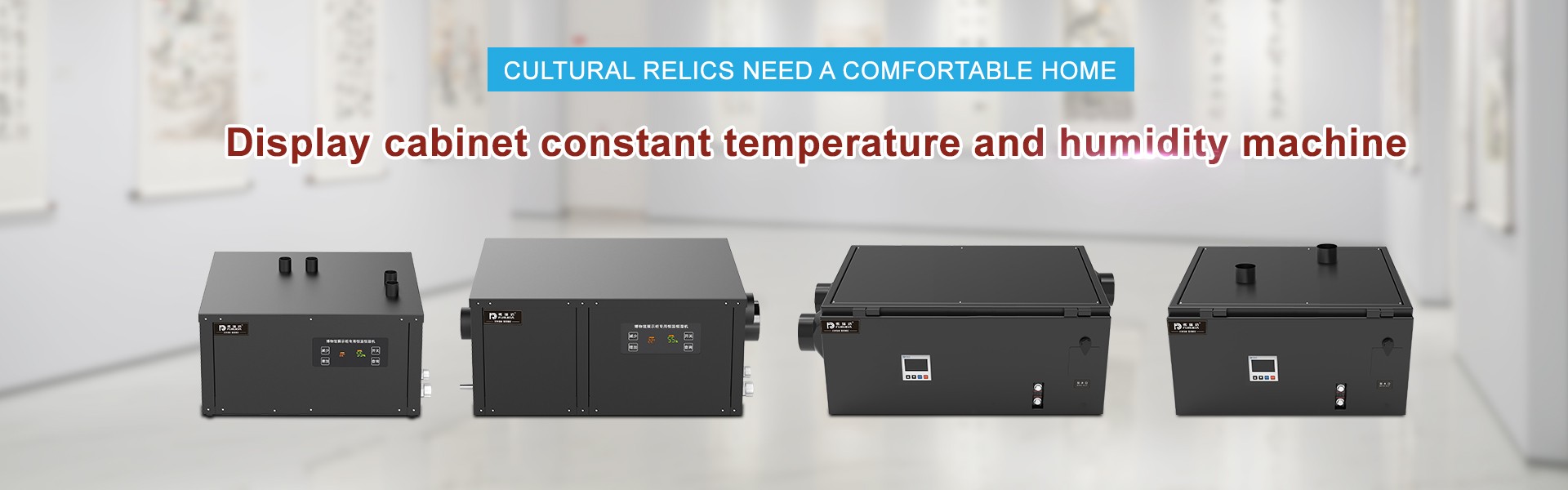
In scenarios requiring strict environmental control—such as libraries, collection rooms, music instrument storage, and archives—smart
dual-control devices demonstrate irreplaceable value. These spaces demand exceptional stability in temperature and humidity: paper,
wood, metal artifacts, and precious artworks can all suffer damage from fluctuations.
Traditional methods may require deploying multiple devices and relying on complex control systems. In contrast, integrated dual-control
units offer a simpler, more reliable solution. They automatically maintain a narrow-range constant temperature and humidity environment,
preventing issues like condensation, drying out, mold growth, or thermal expansion and contraction. This makes environmental management
effortless and precise. For tranquil spaces like libraries, the low-noise operation of a single device also holds advantages over coordinating
multiple units.
Future Outlook
As IoT and AI technologies further permeate daily life, future smart dual-control devices will increasingly “understand” both environmental
and user needs. By integrating with other smart devices in the space, learning user habits, and even incorporating external data like weather
forecasts, systems can achieve more proactive adaptive adjustments. This transforms precise, efficient, and comfortable environmental
management into an unobtrusive, background operation.
From functional layering to intelligent integration, the innovative convergence of dehumidification and temperature control is quietly
driving a quality revolution in environmental regulation. It no longer addresses isolated issues like “too humid” or “too hot,” but
instead strives to create a microclimate that is finely tuned and consistently stable—one that truly aligns with the needs of both people
and objects. This may well represent technology's essential return to serving humanity.
 vivienhu0427@hotmail.com
 +86 15958041362
 vivien@hzfreeair.com