
In modern home design, true luxury is no longer about elaborate decorations, but about having ultimate control over air quality. We long for a home that is dry and comfortable, yet one that breathes naturally, just like a person. However, in the pursuit of this “balance,” we often find ourselves caught in a dilemma between “dehumidification” and “ventilation.”
In traditional solutions, dehumidifiers combat humidity while fresh air systems handle air exchange—each operating independently. But is there a way to merge these two functions, or even create a synergistic effect akin to a chemical reaction? The answer lies in the wisdom of functional integration.
Integration: Returning Space to Minimalism
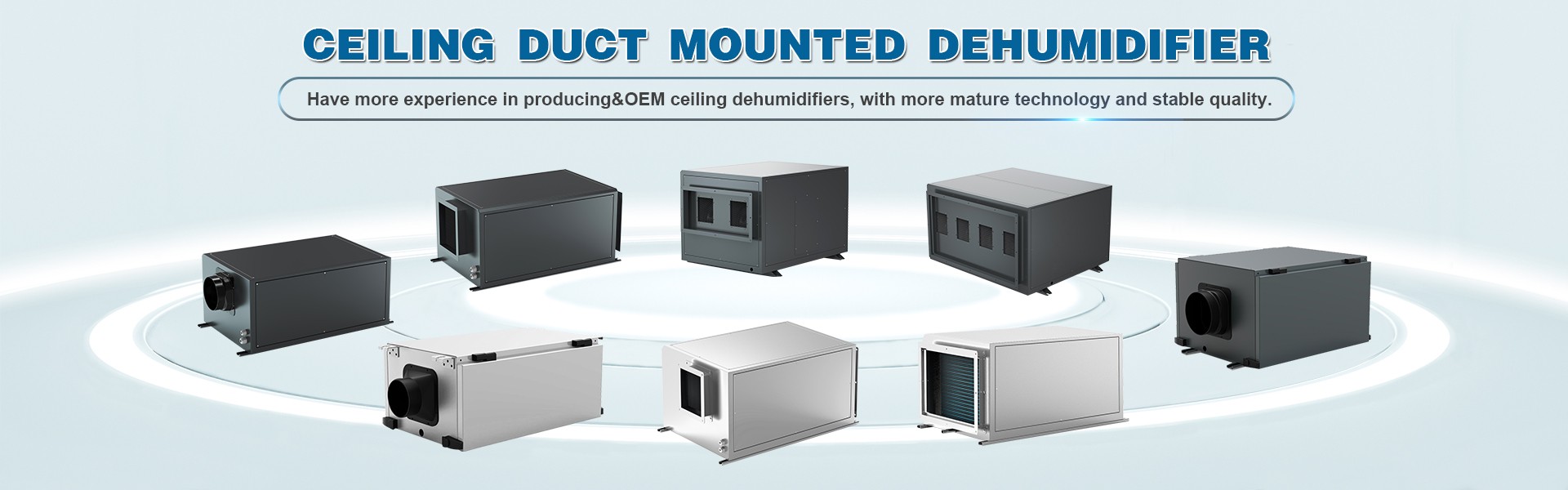
“Functional integration” is not merely a simple stacking of hardware, but a deep integration based on architectural structure and aerodynamics. By integrating the ductwork for the ceiling-mounted dehumidifier and the fresh air system during the early stages of renovation, you no longer have to deal with a bulky floor-standing dehumidifier cluttering a corner, nor do you need to drill multiple conspicuous holes in the walls for the fresh air system.
When the two systems are “merged” within the ceiling, they share a single, precision-engineered ductwork system. This physical integration frees up valuable floor and wall space. More importantly, it establishes a unified “respiratory system” for the living environment, rather than two “independent organs” that interfere with one another.
The Battle of Two Technical Approaches: Standalone Dehumidification vs. Ventilation-Integrated Dehumidification
To understand how 1+1 can be greater than 2, we must first clarify the fundamental difference between a standard dehumidifier and a dehumidifier with fresh air functionality.
A standard dehumidifier (whether portable or ceiling-mounted) is essentially a “master of internal circulation.” It operates like an internal washing machine, continuously drawing in indoor air, extracting moisture through condensation technology, and then blowing the dry air back into the room. Throughout this process, the air circulates only within the room. The advantage is that it can quickly reduce indoor humidity, but the drawback is equally obvious: it fails to address air quality issues. During the rainy season when windows and doors are tightly shut, while the air may feel drier, problems such as rising carbon dioxide levels and the accumulation of pollutants like formaldehyde persist. Prolonged exposure to such conditions can lead to feelings of stuffiness and dizziness.
Dehumidifiers with fresh air functions, however, break through the limitations of “internal circulation.” They connect to the outdoor atmosphere via independent ductwork. This means they possess “bidirectional” breathing capabilities:
Active Intake: It can actively draw in fresh outdoor air as needed;
Pre-treatment: Before sending this fresh air into the room, the dehumidification module inside the unit performs deep dehumidification;
Clean Delivery: After passing through multiple filtration stages (typically equipped with pre-filters, medium-efficiency, or even high-efficiency filters), pollutants such as outdoor dust and pollen are removed, delivering dry, clean fresh air to every room.
This is true “source control”—not only drying the existing air, but also ensuring that every breath of air entering your home has been “purified” beforehand.
The Perfect Balance in Spring and Fall: The Confidence to Keep Windows Closed
For many households, spring and fall are “blind spots” when it comes to living comfort.
During these two seasons, while the outdoors may be crisp and clear in the fall or full of spring vitality, the air is rife with “silent killers”—high concentrations of pollen and willow catkins, as well as high-humidity air masses caused by temperature fluctuations between day and night. Opening windows for ventilation allows allergens and moisture to rush in, causing furniture to become damp, floors to develop moisture, and even triggering rhinitis; keeping windows closed leads to rising indoor carbon dioxide levels, making the air stale and inducing drowsiness.
This is where ceiling-mounted dehumidifiers with fresh air functions prove their irreplaceable value.
When you set the system to “Fresh Air Dehumidification Mode,” it transforms into a “smart gatekeeper.” On one hand, it closes the physical pathway created by traditional window ventilation, keeping moisture, pollutants, and noise out; on the other hand, it uses positive pressure to gently introduce fresh outdoor air into the room after subjecting it to dual “dehumidification + filtration” treatment.
The core of this system lies in the principle of letting in only “good air” while keeping out “bad moisture.”
Because treated fresh air is continuously injected into the room, a slight positive pressure environment is created, forcing the existing stale air to be passively expelled through door and window gaps. Without the need to open any windows, the room achieves complete air exchange multiple times per hour. What you experience at home is air as fresh as that in a mountain valley, combined with a dry, desert-like sensation. You’ll never again have to worry about feeling groggy upon waking up in the morning, nor about mold spots forming on clothes stored deep in your closet due to dampness.
Creating a “Healthy Home” That Breathes
When dehumidifiers and fresh air systems are deeply integrated, they jointly build a complete ecosystem. This is not merely a combination of devices, but an embodiment of a living philosophy.
In such a “healthy home,” walls are no longer cold barriers but rather breathing skin; appliances are no longer rigid machines but the “lungs” of the house. It can sense subtle changes in the environment:
On rainy days, it automatically increases dehumidification to strictly guard against even the slightest intrusion of moisture;
On days with high pollution, it closes the fresh air valves, activates internal circulation for deep purification, and only introduces fresh air once the air quality improves;
Late at night, it silently delivers oxygen-rich fresh air to the bedroom, diluting carbon dioxide to ensure deep, restful sleep.
This synergistic effect, where 1+1>2, ultimately serves the physical and mental well-being of the residents. It resolves the freshness issue that traditional dehumidifiers cannot address, and compensates for the shortcomings of conventional fresh air systems—specifically their inadequate dehumidification capabilities during the “return of the south wind” and the plum rain season.
When a home is equipped with an intelligent, coordinated “respiratory system,” it truly comes to life. In such a space, you no longer need to endure stuffiness for the sake of dryness, nor endure dampness for the sake of ventilation. You simply need to settle in with peace of mind; leave the rest to your home that breathes.
 vivienhu0427@hotmail.com
 +86 15958041362
 vivien@hzfreeair.com