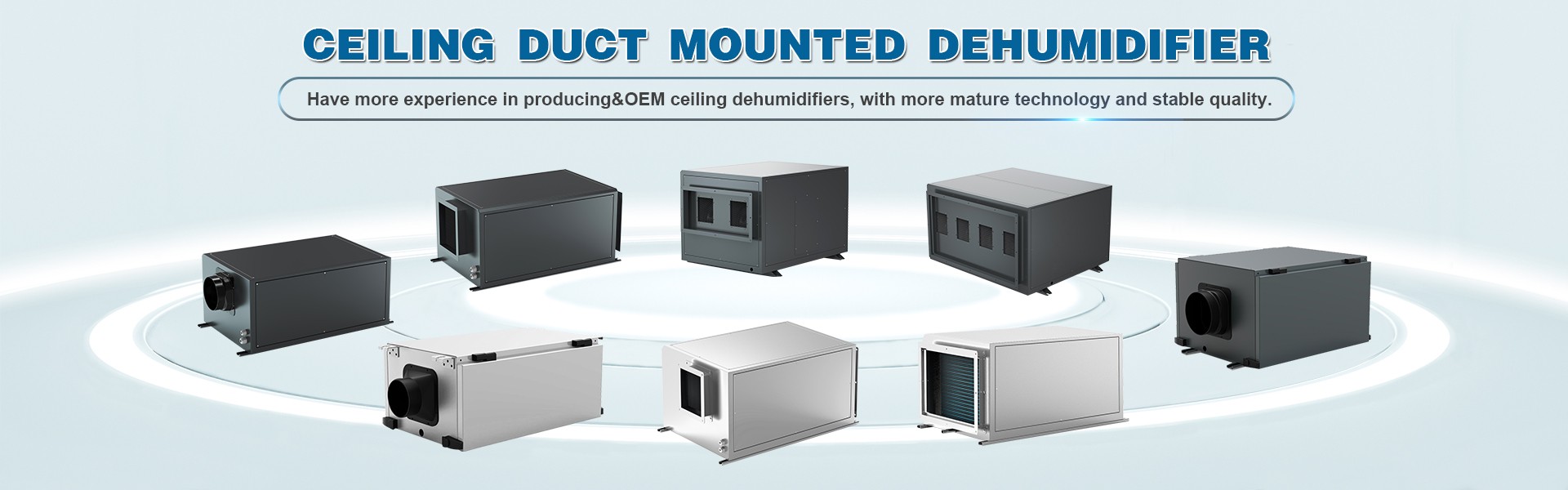
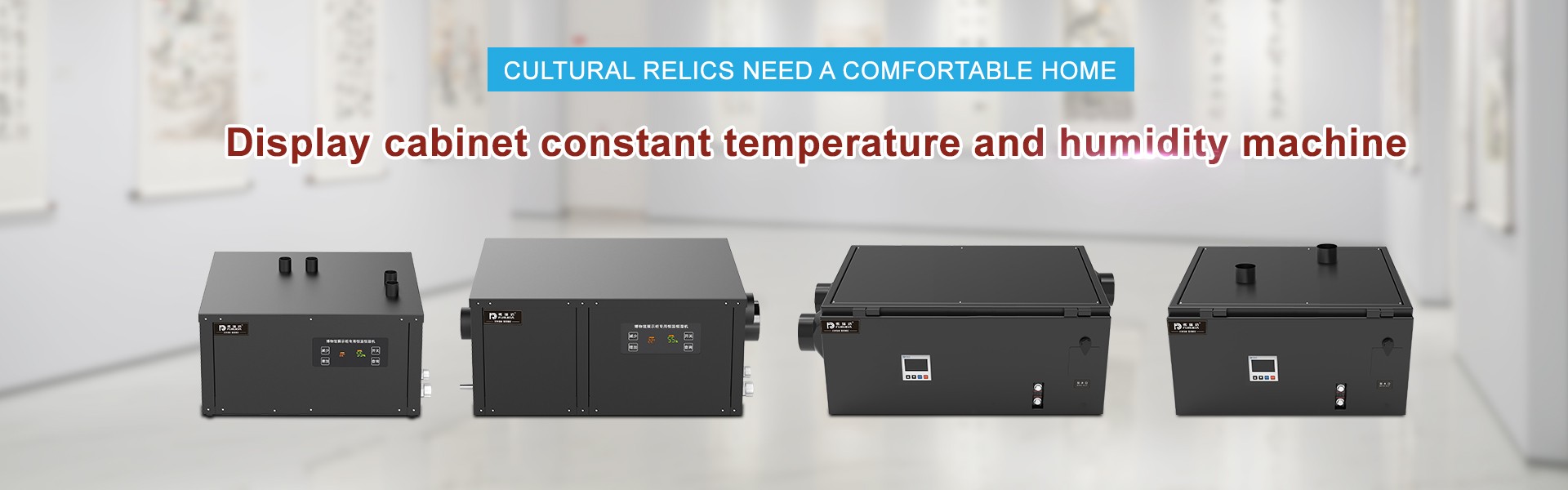
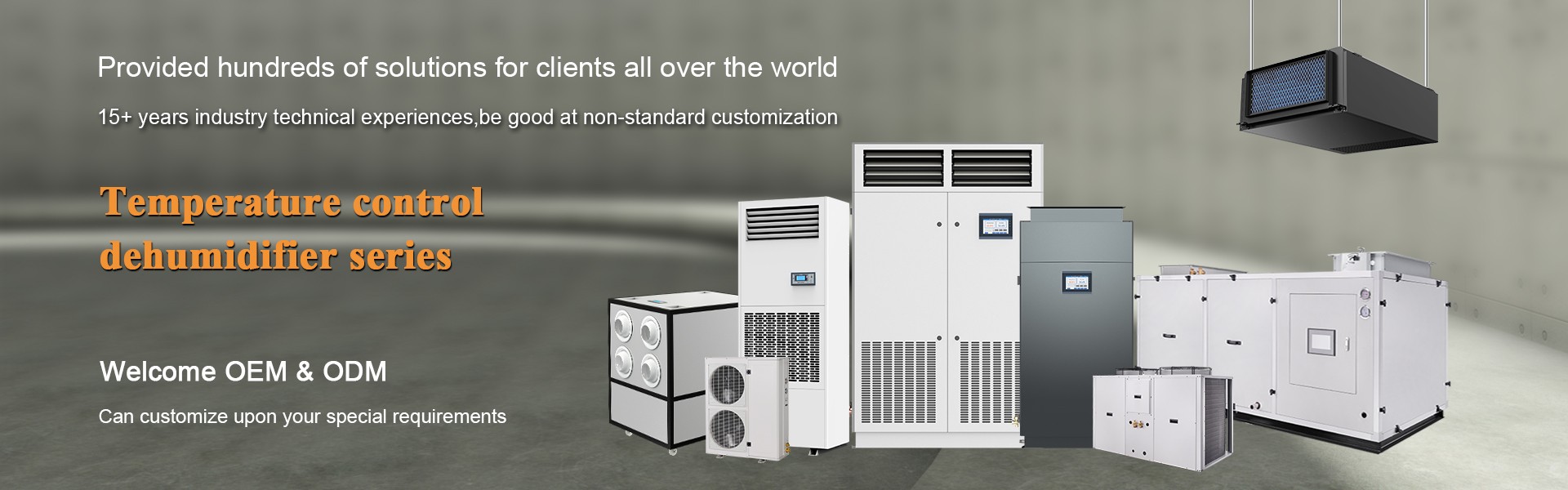
In numerous fields such as industrial and commercial production, specific storage, precision manufacturing, and even high-end
agriculture, dehumidification equipment is one of the core infrastructures for ensuring environmental stability, product quality,
and process safety. However, traditional standardized dehumidifiers often encounter energy efficiency dilemmas such as "a large
horse pulling a small cart" or insufficient dehumidification capacity when dealing with complex and variable application scenarios.
Their rigid operation mode and continuously rising energy costs are increasingly at odds with the sustainable operation goals of
sustainable development. Therefore, an energy-saving solution centered on deep energy efficiency, through highly customized
design to enhance the overall energy efficiency ratio (EEP), is becoming an inevitable choice to meet modern sustainable operation
needs. Its core lies in going beyond the simple "dehumidification" function and building an efficient intelligent system deeply
integrated with the environment and the process.
I. Core Design Philosophy: Paradigm Shift from "Single Unit" to "System Energy Efficiency"
The design of energy-efficient custom dehumidifiers primarily involves a paradigm shift in thinking. It does not merely stack efficient
components; instead, it is based on systemic thinking, dynamic matching, and life cycle assessment for global optimization.
Systematic Energy Efficiency Thinking: The design starting point expands from the individual dehumidifier to the entire "space -
equipment - process" system. It fully considers external conditions such as building envelope, indoor thermal and humidity load
characteristics, internal air flow organization, and residual heat/waste cooling sources, integrating the dehumidifier as an organic
unit of the system for design, aiming to minimize the energy consumption of the entire system during operation.
Dynamic Adaptability Principle: Acknowledging that temperature and humidity loads, environmental parameters, and even
production processes are all in a state of dynamic change in the application scenarios. The customized design aims to enable
the dehumidifier to have acute perception and flexible adjustment capabilities, so that its output (dehumidification capacity,
supply air parameters) can be real-time and precisely match actual demands, avoiding excessive dehumidification and energy
waste under constant power.
Life Cycle Cost (LCC) Orientation: The focus of assessment shifts from the initial purchase cost to the full cycle cost covering
equipment energy consumption, maintenance, reliability, and service life. Higher initial energy efficiency investment is intended
to exchange for significant energy-saving benefits and lower carbon emissions during the operation phase, thereby achieving
long-term economic and environmental friendliness.
II. Key Implementation Path: Deep Integration of Three Major Technical Pillars
Guided by the above concept, the achievement of energy-saving goals relies on the customized application and synergy of the
following core technologies.
Embedded Innovation of Heat Recovery Technology:
This is one of the most direct and effective paths to enhance energy efficiency. Customized design allows various heat recovery
devices (such as sensible heat exchangers, total heat exchangers, heat pipe recoveryers, etc.) to be deeply integrated into the
dehumidification system or the duct system. The core lies in using the energy (cooling or heating) carried away by the exhaust
air to pre-treat the incoming fresh air or return air. For example, in the process of refrigeration dehumidification, by recovering
the cooling capacity of the exhaust air to pre-cool the high-temperature and high-humidity fresh air, the load of the evaporator
can be significantly reduced; in situations requiring reheating, recovering the condensation heat for air re-heating can completely
or partially eliminate the energy consumption of additional electric heating. The essence of customization lies in calculating and
matching the optimal heat recovery efficiency and form based on specific intake/outtake parameters, air volume ratio and space
conditions, to achieve closed-loop optimization utilization of energy within the system.
Precise Coupling and Capacity Adjustment of Variable Frequency Compressors:
As the "heart" of the dehumidifier, the energy consumption of the compressor is dominant. In the customized design, using variable
frequency compressors and precisely coupling them with the entire system is crucial. Through variable frequency drive, the compressor
speed can be adjusted continuously according to the real-time sensed humidity load, thereby achieving continuous and linear control
of the dehumidification volume, completely avoiding the energy loss and humidity fluctuation caused by the "start-stop" operation
of traditional fixed-frequency compressors. Deeper customization involves optimizing the selection and control curve of the compressor
based on specific temperature and humidity working ranges, evaporation and condensation temperature requirements, to ensure that
it is in the most efficient working point for the vast majority of operating time, significantly improving the seasonal energy efficiency ratio (SEER).
Intelligent Power Regulation and Adaptive Control System:
This is the brain and nerve for achieving "dynamic adaptability". The customized intelligent control system integrates a high-precision
multi-sensor network, which can not only monitor air temperature and humidity, but also connect process demand signals, indoor
personnel activity information and even electricity price time signals. Based on advanced algorithm models, the system can coordinate
the regulation and dynamic power allocation of multiple actuators such as compressor frequency, fan speed, bypass valve of heat
recovery device, and auxiliary electric heating elements. For example, it can automatically switch to ultra-low power maintenance
mode during night periods; enter standby energy storage state during process intermittent periods; or predictively adjust
the output based on the gradient of humidity change to achieve "on-demand dehumidification" and "forward-looking control".
This deep system-level intelligence extends energy efficiency optimization from the hardware level to the operation strategy level,
maximizing the value of every watt of electricity.
Conclusion
The design and implementation of energy-saving customized dehumidifiers mark a profound transformation in dehumidification
technology, shifting from providing general tools to offering highly efficient solutions. Through a systematic energy efficiency design
concept, it integrates and tailors the three paths of heat recovery technology, variable frequency drive, and intelligent control, significantly
enhancing the real-time energy efficiency ratio of the equipment and endowing it with long-term vitality to adapt to complex scenarios
and respond to sustainable operation requirements. This path of seeking optimal energy efficiency through customization not only reduces
the operating costs and carbon footprint of users but also provides a solid technical and practical paradigm for promoting the entire industry
towards a green and refined direction. In the current era of increasingly severe energy and environmental challenges, this is undoubtedly an
important cornerstone for building future sustainable industrial and commercial environment facilities.
 vivienhu0427@hotmail.com
 +86 15958041362
 vivien@hzfreeair.com