During the long aging process of wine, environmental stability is the key to determining its quality. An ideal wine cellar must maintain a temperature firmly between 12 and 15 degrees Celsius, with relative humidity kept within the optimal range of 60% to 70%. However, this seemingly mild “low-temperature, high-humidity” environment presents an almost insurmountable technical challenge for conventional air conditioning systems. Once traditional air conditioners venture into this forbidden territory, they often face a double dilemma: either excessive dehumidification, causing corks to shrink and oxidize, or surface condensation, where water droplets damage wine labels. However, constant temperature and humidity control units—specifically designed for wine cellars—are quietly solving this industry-wide challenge as “invisible air conditioners.”
I. The Peril of Condensation: The Crisis of Condensation Under Low-Temperature Airflow
When standard ceiling-mounted air conditioners blow cold air at around 12°C into a wine cellar, a physical phenomenon that is easily overlooked comes to light: the temperature of the air outlet surface and the surrounding area drops sharply, even falling below the dew point of the indoor air. With relative humidity exceeding 60% inside the wine cellar, the air contains a significant amount of latent moisture. Once this moisture comes into contact with the cold air outlet louvers, panels, or frames, it instantly condenses into tiny water droplets. Initially appearing as a thin mist, it gradually coalesces into droplets that silently fall under the force of gravity.
For wine collectors, this is by no means a minor issue. Any single drop of condensation landing on a wine bottle can cause the label to become blurred and mottled. A damaged label not only compromises the aesthetic integrity of the collection but also significantly reduces its value on the secondary market. More seriously, persistent condensation can seep through the gaps in the air vents into the ceiling cavity, fostering mold growth and corroding the structure, causing irreversible damage to the entire wine cellar.
II. Anti-Condensation Design: Preventing Water Drops at the Source
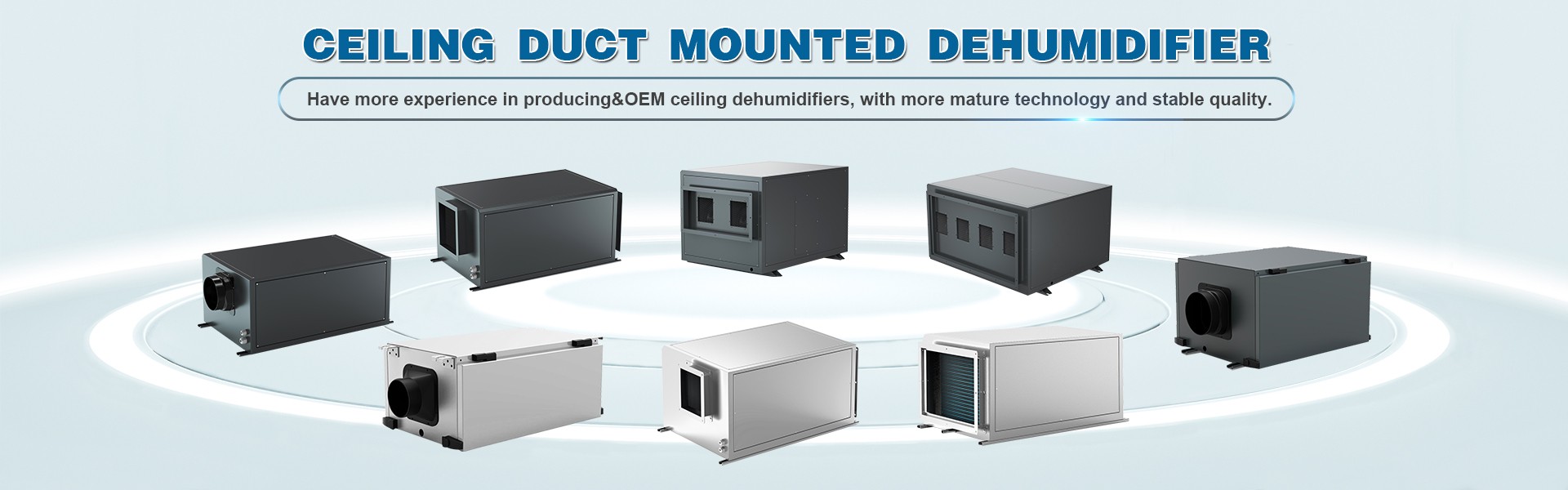
The core breakthrough of the constant temperature and humidity unit is first reflected in the precise control of the air supply terminals. The accompanying anti-condensation air outlets abandon the simple construction of traditional air conditioning louvers, instead utilizing composite materials with excellent thermal insulation properties or metal structures treated with special thermal break technology. This creates an effective thermal barrier between the inner and outer surfaces of the outlet, ensuring that as cold air passes through, the outlet’s outer surface temperature remains consistently above the cellar’s ambient dew point—thereby physically eliminating the possibility of condensation.
At the same time, the design of the airflow angle incorporates ingenious details. Constant temperature and humidity systems typically employ a laminar flow or diffuser-style airflow pattern, allowing the cool air to first flow along the ceiling or wall surfaces. After thoroughly mixing with the indoor air and warming up, the air then slowly descends to the storage area. This “mix first, then reach” path prevents cold air from blowing directly onto wine bottles and shelves, while also significantly reducing the risk of localized overcooling. Some high-end designs even integrate supply and return air vents into unified light channels or decorative trim, allowing the equipment to blend completely into the architecture, leaving only the silently flowing air at the optimal temperature and humidity.
III. The Dilemma of Dehumidification: How Conventional Air Conditioners “Mean Well but Do Harm”
If condensation is a visible enemy, then excessive dehumidification is an even more insidious threat. When a conventional air conditioner is running, the surface temperature of its evaporator is typically far below the air’s dew point. Regardless of the set temperature, as long as the compressor is running, condensation will continuously form on the evaporator surface and be drained away. While this principle is effective in standard cooling applications, it becomes a fatal flaw in a wine cellar environment—when the air conditioner lowers the temperature to 12°C, it often simultaneously drops the relative humidity to 35% or even lower.
Excessively dry air causes corks to gradually lose their elasticity, shrink, and deform, allowing large amounts of external oxygen to seep into the bottle and accelerate the wine’s oxidation. A bottle of fine wine from a prestigious estate, which could have aged for decades, may lose all its flavor, see its fruit aromas dissipate, and develop a rancid odor within just a few months. Furthermore, excessively low humidity can cause labels to curl and crack, and even lead to the wooden racks shrinking and becoming loose, thereby disrupting the entire “micro-ecosystem” of the wine cellar.
IV. Subtle Balance: “Isothermal Humidification” and “Mild Dehumidification” in Constant Temperature and Humidity Units
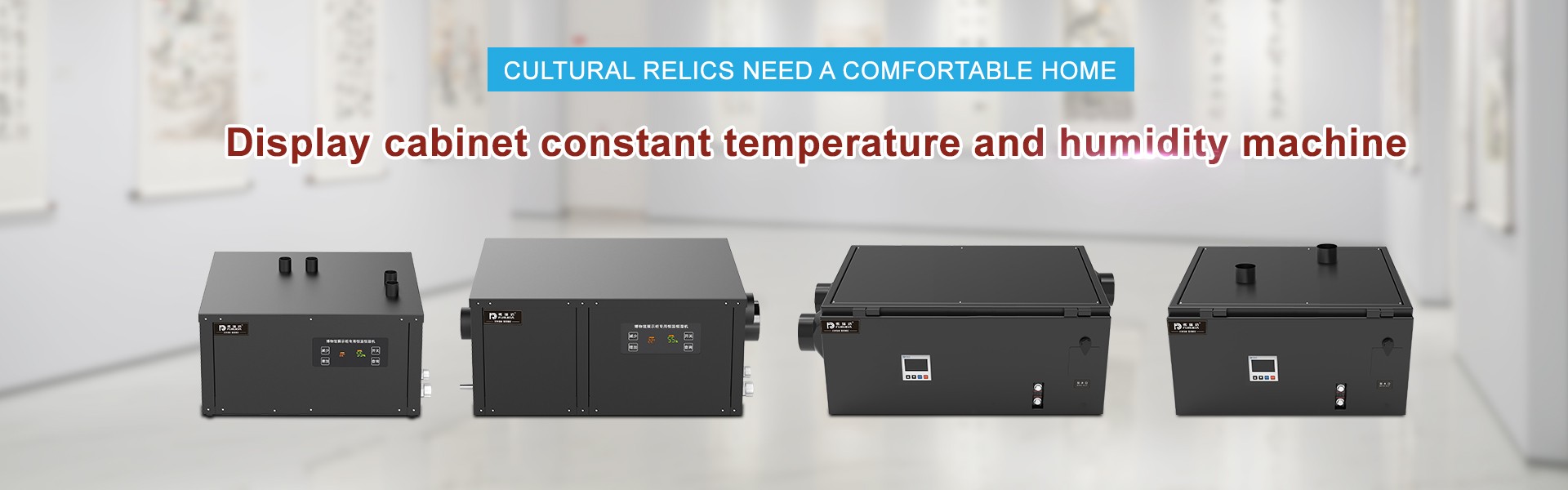
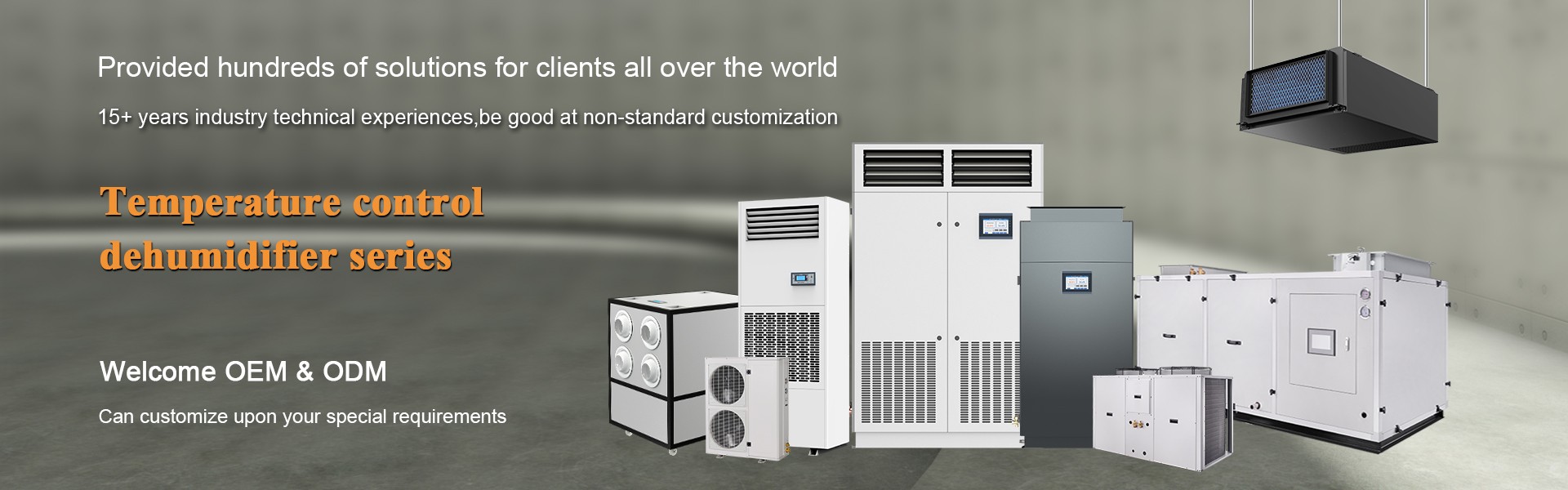
Unlike the crude dehumidification logic of ordinary air conditioners, constant temperature and humidity units designed specifically for wine cellars employ a more sophisticated control strategy. At its core lies the dynamic balance between “isothermal humidification” and “mild dehumidification.”
“Mild dehumidification” refers to the system not seeking to condense and remove large amounts of moisture from the air. Instead, by controlling the evaporator’s surface temperature and refrigerant flow, the system maintains a temperature slightly below the dew point—but not excessively so. As a result, only a small amount of moisture is gently released, allowing the relative humidity to gradually drop from excessively high peaks back to the set range, without plummeting to arid levels. When humidity drops to around 60%, the compressor automatically adjusts its operating frequency or even temporarily shuts down to prevent over-dehumidification.
“Isothermal humidification,” on the other hand, is a powerful tool for addressing low temperatures or dry conditions in winter. During cold seasons, or when outside fresh air introduces dry air, the system activates the electrode humidification or steam humidification module to convert clean water into fine water vapor, which is evenly mixed into the supply airflow. Unlike conventional air conditioners, which rely on crude “cool-then-heat” regulation—using refrigeration to dehumidify and electric heating to warm—the constant temperature and humidity unit’s humidification process barely alters the air temperature. As humidity rises, the temperature remains steadily locked between 12 and 15°C. This characteristic of “humidifying without raising temperature and dehumidifying without overdoing it” is precisely why it is confidently dubbed the “invisible air conditioner.”
V. Conclusion: The Philosophy of Silent Wine Preservation
An exceptional wine cellar should not be filled with the roar of air conditioners, should not show water dripping from vents, and certainly should not carry the scent of mold. A truly professional constant temperature and humidity unit acts like a silent and loyal steward, working year-round to keep temperature and humidity within the narrowest possible fluctuation range. It harmonizes the seemingly contradictory parameters of low temperature and high humidity to create the optimal cradle for wine maturation. All anti-condensation vents, precise airflow angles, gentle dehumidification logic, and isothermal humidification technology ultimately serve a single purpose—to allow every bottle of wine to naturally evolve over quiet years, so that when it is finally uncorked, it retains the purity and vitality it possessed the moment it was bottled.
And this is the true meaning of “invisible”: the equipment remains unseen, the conditions are as steady as a rock, and only the aroma of the wine grows richer with time.
 vivienhu0427@hotmail.com
 +86 15958041362
 vivien@hzfreeair.com