
In the context of high-end space design, climate control—maintaining constant temperature and humidity—has long evolved from a “luxury option” to an “essential feature.” Whether it’s the aging atmosphere of a cigar room, the stability of collections in a wine cellar, or the protection of precision instruments in a laboratory, precise environmental parameters are the fundamental guarantee of quality. However, for a long time, the core equipment required to achieve this functionality—constant temperature and humidity units—has remained in a constant, awkward conflict with spatial aesthetics.
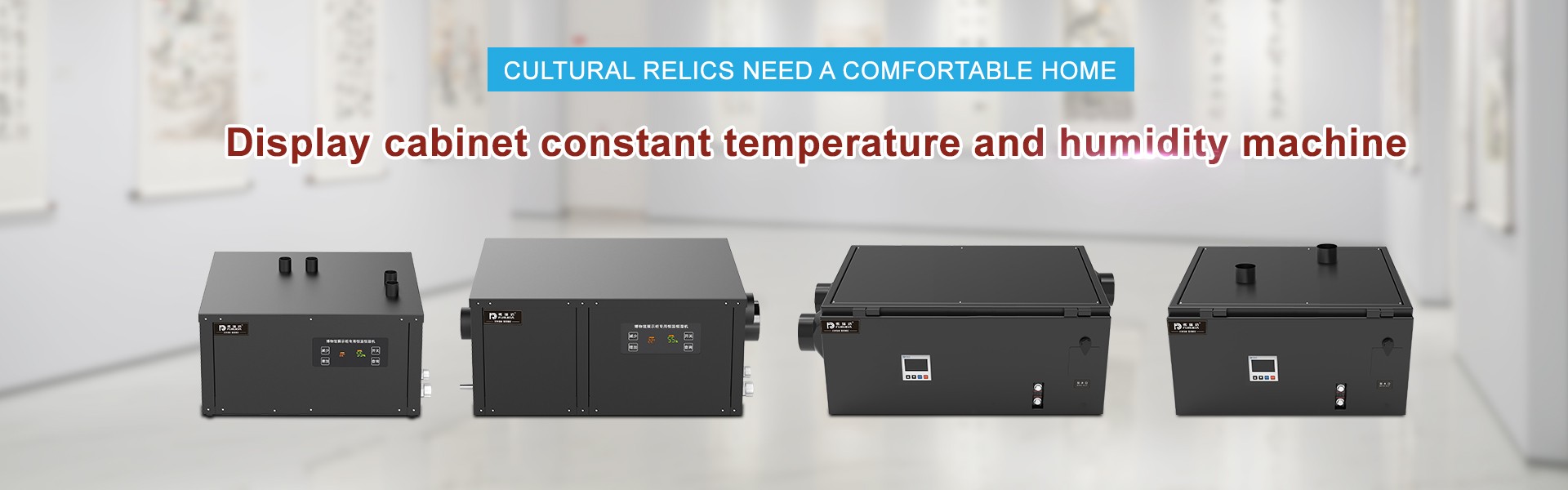
Traditional floor-standing units, no matter how meticulously crafted, cannot escape a fundamental issue: they are “intruders” in the space. With the floor already occupied by furniture, circulation paths, and visual focal points, these massive units not only consume precious floor space but also disrupt the cohesive narrative of materials and colors with their jarring presence. A meticulously selected full-wall stone surface may be more than half obscured by a unit placed against the wall; the warm, tranquil atmosphere of a cigar room clad in dark wood is often disrupted by a metal cabinet in the corner.
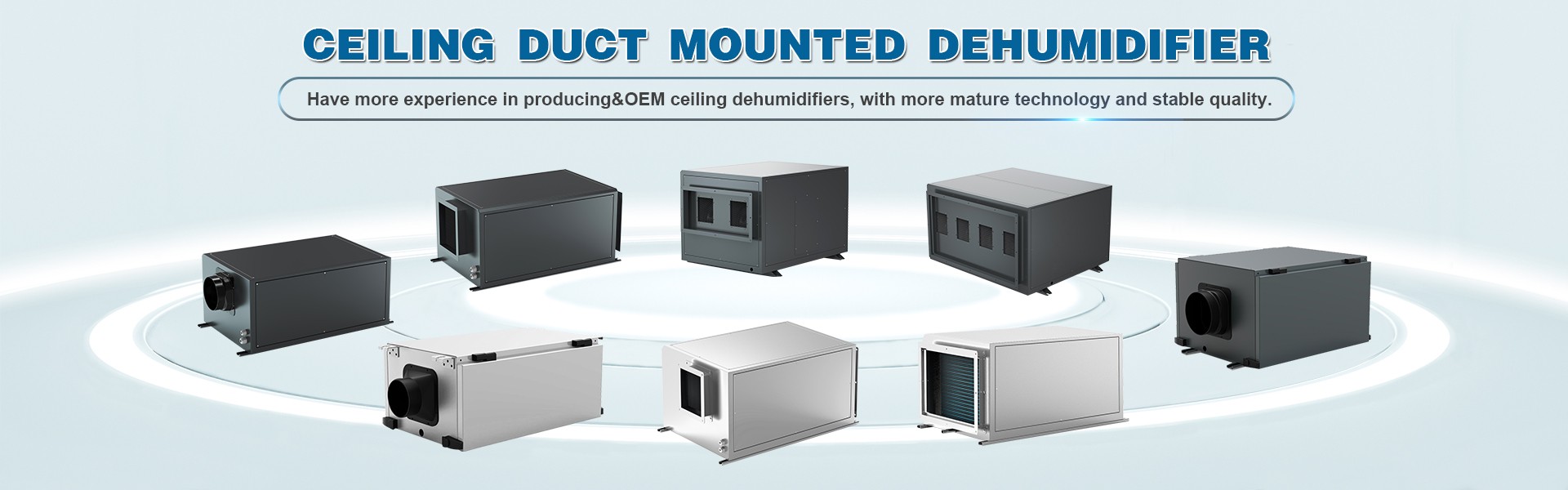
The advent of ceiling-mounted installations has fundamentally transformed this situation. It breaks down and elevates the entire temperature and humidity control system, ultimately concealing it entirely within the geometric structure of the ceiling. All the user perceives are the carefully arranged air outlets—which may take the form of linear grilles, custom perforated panels that blend seamlessly with the ceiling material, or even remain completely hidden within the shadows of indirect lighting. The equipment itself is thoroughly “concealed.”
The aesthetic value of this “invisibility” is revolutionary. In a cigar room, dark walnut or Spanish cedar can be laid out seamlessly from floor to wainscoting—without breaks or obstructions—allowing the wood’s natural texture and the patina of age to be presented in a continuous, unbroken flow. In the wine cellar, the rough, historic stone walls require no cutouts for equipment; the unbroken stone pattern extending from floor to vaulted ceiling makes the space feel like a genuine underground cellar. In the laboratory’s dust-free environment, ceiling-mounted installations eliminate cleaning blind spots and airflow disruptions caused by floor-level equipment; smooth walls and seamless floors together form a truly pristine interface. For the first time, visual purity has found harmony with functional precision.
However, concealing equipment is only the first step. What truly determines the quality of a space is the invisible flow of air. Can ceiling-mounted installations handle the precise control of constant temperature and humidity? The answer lies in the scientific principles of airflow organization.
Traditional floor-mounted units typically operate in a “local disturbance” mode, where airflow is discharged from the top or sides of the unit, creating a temperature and humidity control zone near the floor. This approach is highly prone to creating vortices and dead zones—air in corners may stagnate for extended periods, leading to significant variations in temperature and humidity across different areas of the space. In contrast, ceiling-mounted air distribution systems rely on the logic of “whole-space displacement” or “layered control.”
When treated air is uniformly distributed from the ceiling, designers can flexibly select diffusers, swirl diffusers, or linear slot diffusers based on the space’s aspect ratio, ceiling height, and heat source distribution. In an ideal airflow organization scheme, fresh air descends slowly from the ceiling at a low velocity, acting like an invisible “air piston” that gently pushes the existing air toward the return air vents. This process avoids the discomfort caused by direct airflow while ensuring that every part of the space—from floor to ceiling, from the center to the corners—undergoes continuous, uniform air exchange.
For cigar rooms, this means that suspended smoke particles are efficiently removed from the breathing zone and directed to the filtration system, rather than settling in corners. For wine cellars, stable laminar flow prevents potential damage to corks and wine caused by localized temperature fluctuations. For laboratories, dead-zone-free airflow circulation ensures that contaminant concentrations remain consistent throughout the space, eliminating dangerous localized accumulations.
Furthermore, modern ceiling systems allow for the modular integration of supply vents, return vents, and access panels, combining with downlights, smoke detectors, sprinklers, and other equipment to form a fully functional yet visually unified “ceiling system.” During maintenance, simply remove the custom panels to access the core components—true design never comes at the expense of ease of maintenance.
From opposition to integration, from the visible to the invisible, the ceiling-mounted constant temperature and humidity system achieves more than a simple relocation of equipment; it represents a dimensional shift in our perception of space. It acknowledges a fundamental truth: in truly high-end spaces, the most exceptional technology should remain invisible. When the eye no longer needs to “make way” for equipment, when air circulates and purifies itself silently, the space returns to its essence—becoming a pure vessel that embodies life, taste, and creativity. And that guardian hidden above the ceiling remains silent, yet is never absent.
 vivienhu0427@hotmail.com
 +86 15958041362
 vivien@hzfreeair.com