
In the world of cigar care, a commonly misunderstood concept is gradually being reevaluated by seasoned enthusiasts and professional collectors—namely, that humidity control is not necessarily better the more “constant” it is. Traditional wisdom holds that a humidor requires a humidity level that remains absolutely static, yet true connoisseurs who understand the art of cigar aging know better: cigars need to “breathe,” not be locked in a state of stagnation behind glass.
The Essence of Aging: A Slow Breathing Process
Every premium cigar, from the moment it is rolled until the instant it is lit, undergoes a continuous biochemical reaction. The residual moisture, oils, and microbial communities within the tobacco leaves interact, gradually softening the tannins, slowly releasing off-flavors, and continuously generating and transforming aromatic compounds. This process is vividly described as the cigar’s “breathing”—it requires a stable foundational environment while also relying on moderate environmental exchange.
When humidity is completely static and air no longer circulates, the humidity gradient between the cigar’s surface and interior disappears, causing the aging reaction to stagnate. Just as the human body needs to inhale and exhale, a cigar must absorb moisture from the environment and release excess moisture into it. This two-way exchange of substances is the true driving force behind a cigar’s “maturation.”
The Trap of Constant Values: Stagnation Equals Suffocation
Many cigar room designers strive to lock humidity at a “perfect” figure like 70%, resorting to precise yet rigid control systems. However, when a unit frequently cycles its compressor to maintain absolute stability, each startup causes a severe disturbance in humidity—the localized overcooling caused by the instantaneous evaporation of refrigerant can cause humidity near the air outlet to plummet by tens of percentage points; during the warm-up phase after shutdown, humidity rebounds rapidly.
It is these high-frequency, violent fluctuations that are the true enemy of a cigar’s wrapper. Repeated expansion and contraction cause micro-cracks in the fragile wrapper fibers, which can range from affecting the appearance to causing the wrapper to split. More importantly, the humidity gradient inside the cigar is repeatedly disrupted, preventing the aging process from developing a stable direction. The result is a “fatigued” cigar—one with muddled flavors and uneven burn.
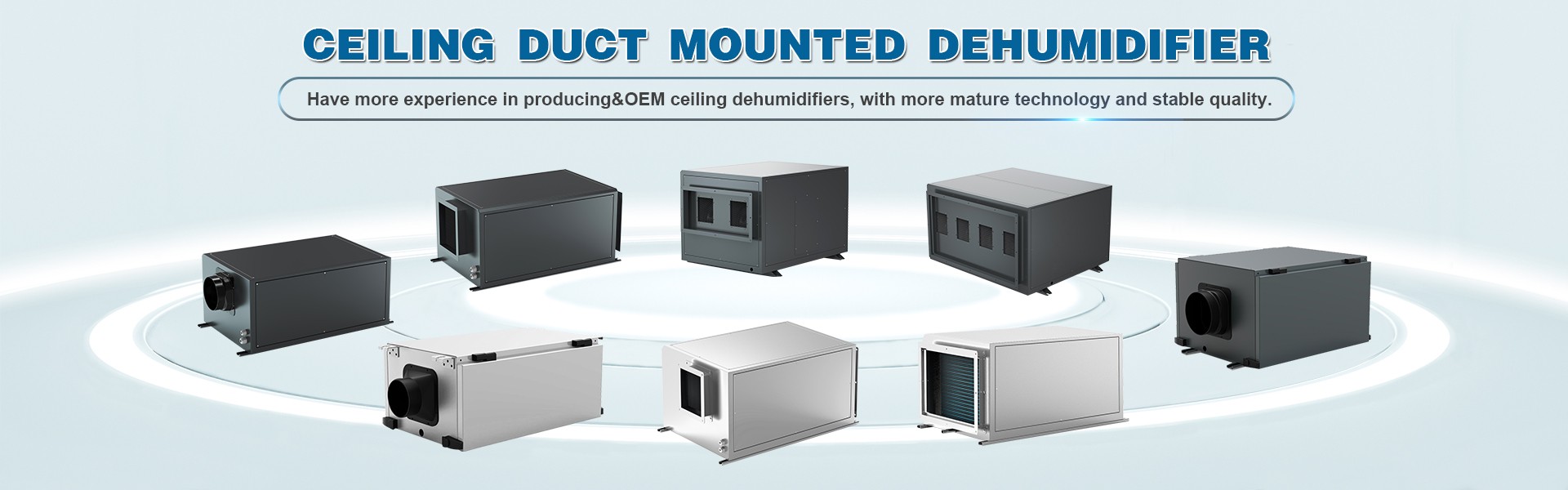
The Wisdom of Ceiling-Mounted Climate Control Units: Intermittent Compensatory Airflow
To address the unique requirements of cigar rooms, professional ceiling-mounted climate control equipment employs a fundamentally different control philosophy. At its core lies the logic of “intermittent compensatory airflow”—the unit does not attempt to lock humidity at a specific absolute value, but rather allows humidity to drift slowly within a reasonable range, making gentle compensatory adjustments only when necessary.
The key to this design lies in the airflow delivery method. Traditional units often use high-speed direct airflow, where cold, hot, or humid air directly impacts the surface of the cigars; in contrast, the air distribution system of ceiling-mounted units is specially designed so that the airflow is diffused and evenly dispersed throughout the entire space at an extremely low velocity. When sensors detect humidity deviating from the set range, the unit does not immediately activate at full power, but instead proportionally adjusts the humidification or dehumidification output based on the degree of deviation, ensuring a smooth transition.
More importantly, the unit’s start-stop logic has undergone a fundamental change. By increasing the evaporator surface area and optimizing the refrigerant circuit, the ceiling-mounted unit achieves longer operating cycles and shorter idle intervals. The compressor no longer cycles on and off frequently but instead operates continuously at a low frequency, with the output cooling capacity precisely controlled within the threshold required to maintain humidity balance. The humidity variation curve produced by this operating mode is not a steep sawtooth wave but a gentle sine wave.
Linear Humidification: Say Goodbye to Pulsed Surges
Complementing deadband control is “linear humidification” technology. Traditional humidification methods typically rely on on/off control—either fully on or fully off—resulting in pulsed humidification output. In contrast, a linear humidification system continuously adjusts the humidification output based on the proportion of the humidity deviation.
In the context of a cigar humidor, this means that when humidity is only slightly low, the unit slowly replenishes it with a minimal amount of moisture. Water molecules blend evenly into the air as vapor, rather than being expelled as visible droplets. This approach fundamentally prevents localized over-humidification—droplets landing directly on the cigar’s surface can cause the wrapper to absorb water and swell, leaving marks or even mold spots after drying.
Another advantage of linear humidification is that it decouples the humidification process from the air circulation process. The unit can keep the fan running continuously at a low speed to maintain micro-circulation, while the humidifier delivers output linearly based on demand. This ensures humidity uniformity while avoiding sudden fluctuations in temperature and humidity caused by the fan cycling on and off.
Protecting the Integrity of the Cigar Wrapper: From the Microscopic to the Macroscopic
The ultimate goal of all the aforementioned technical designs is to protect the integrity of the cigar wrapper. As the cigar’s “outer garment,” the wrapper not only determines its appearance but also plays a crucial role in regulating burn rate and controlling smoke temperature during combustion. An intact wrapper features a dense, orderly fiber structure that allows for moderate contraction when dry and uniform expansion when moist; this elasticity is the foundation for the cigar’s long-term preservation.
When humidity fluctuations are kept within reasonable limits and at a gradual rate, the wrapper fibers have ample time to adapt to environmental changes, ensuring that the expansion and contraction of cell walls remain within their elastic limits. Conversely, sudden, drastic changes exceed the fibers’ fatigue strength, causing irreversible damage. By combining hysteresis control with linear humidification, ceiling-mounted constant temperature and humidity units effectively limit both the magnitude and rate of humidity changes to safe levels.
Conclusion: A Control Philosophy That Respects Nature
The essence of cigar care has never been to fix environmental parameters at a specific ideal value, but rather to create a microclimate for cigars that closely mimics nature. In the natural world, no tobacco field maintains absolutely constant humidity—the gradual changes brought about by the alternation of day and night and the changing of seasons are precisely what shape the complex flavor profiles of premium tobacco leaves.
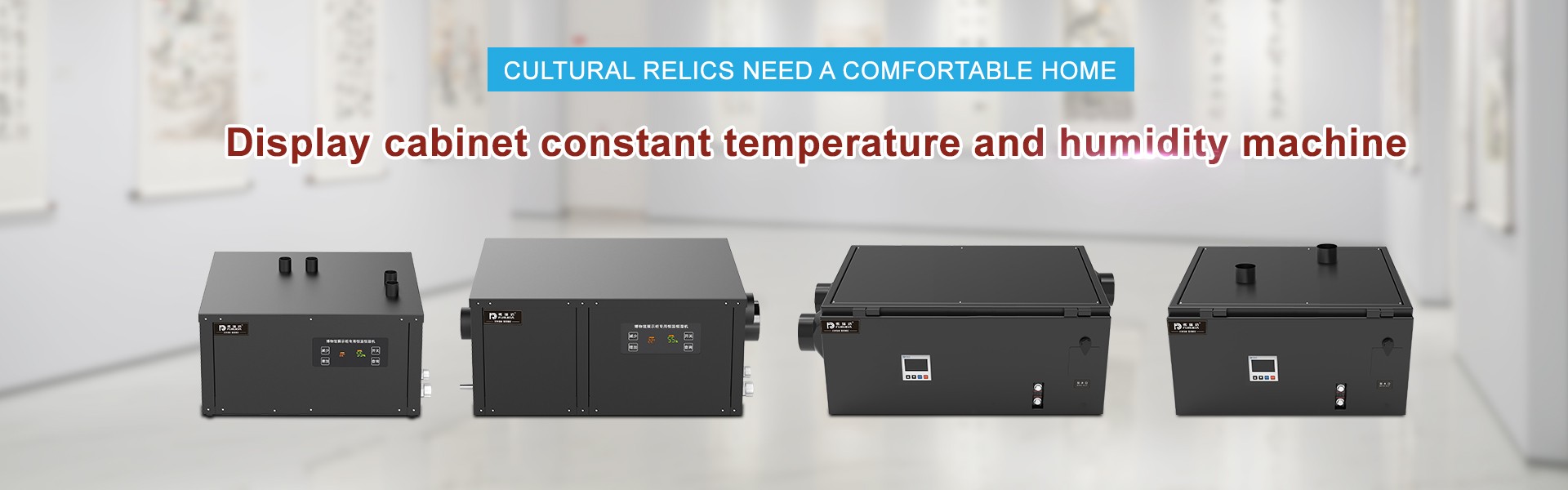
The design ingenuity of ceiling-mounted constant temperature and humidity equipment lies in its abandonment of the obsession with fighting natural laws, opting instead for a more humble approach—using intermittent compensation to simulate natural breezes, hysteresis control to mimic circadian rhythms, and linear humidification to recreate the moisture of morning dew. In such an environment, cigars are able to “breathe slowly” in the truest sense, completing their transformation from green and unripe to rich and mellow amidst gentle fluctuations in temperature and humidity.
 vivienhu0427@hotmail.com
 +86 15958041362
 vivien@hzfreeair.com