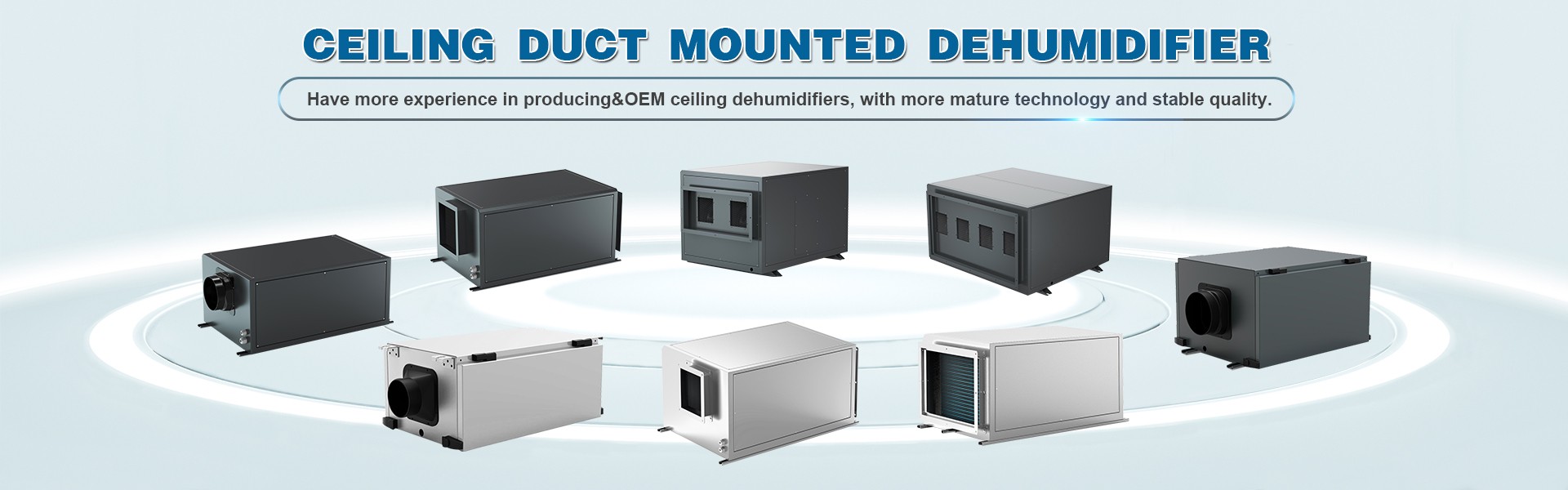

Three years ago, when we were renovating this apartment, my designer and I hardly ever argued over the design plans.
The only time we hit a “deadlock” was over whether or not to install a ceiling-mounted dehumidifier.
At the time, I was being tormented by the southern rainy season and the “return of the south” humidity—water dripping
down the walls, moldy wardrobes, and bedding that always carried a cold, damp chill. But the budget for a ceiling-mounted
dehumidifier was indeed steep, and since it had to coordinate with the ceiling design, once installed, there would be almost
no room for regret. The designer advised me, “You might not use this thing every day, but when you need it, you’ll wish you had it.”
Gritting my teeth, I squeezed it into the budget. Now, three years after moving in—having weathered two full rainy
seasons and one extreme spell of “return of the south” weather—I think I’m finally qualified to answer this
question: Was it worth the money?
Perception: A Kind of Comfort Called “Invisibility”
If I had to describe the change in comfort brought by the ceiling-mounted dehumidifier in one word, it would be “invisibility.”
Before installation, the hygrometer in my home would consistently hover above 80% during the rainy season. That sticky,
clammy feeling was all-encompassing—my skin always felt like it was coated in a thin layer of sweat, the sheets felt damp
to the touch, and even the air felt “heavy” when I breathed. Using the air conditioner’s dehumidification mode could
solve the problem, but in the spring and fall when temperatures aren’t high, running the dehumidifier made me feel chilly.
Plus, the air conditioner’s dehumidification significantly lowered the temperature, making it uncomfortable.
After installing the ceiling-mounted dehumidifier, I set up a smart link: whenever the humidity in any area of the house
exceeds 65%, the unit automatically turns on, and it stops automatically once the humidity drops to 50%.
The most immediate sensation is this: you barely notice it’s running, yet the air feels so much better. There’s none
of the “dry-as-a-bone” side effect you get from air conditioner dehumidification, nor does it blow out warm air like
some portable dehumidifiers, making the room stuffy. It’s like a silent butler, quietly maintaining the humidity at just
the right level: not dry, not sticky—your skin feels comfortable, and your breathing is clear.
This “invisible” comfort is actually the most luxurious experience. Because truly good equipment doesn’t make you
constantly aware of its presence; instead, it makes you forget it’s there, leaving only the comfortable results.
Long-Term Maintenance: The Real “Pitfalls” and “Non-Pitfalls”
Now that we’ve covered the positives, let’s talk about the maintenance issues everyone cares about most. After all,
even the best equipment can turn from a “blessing” into a “pitfall” if maintaining it is a headache.
Cleaning the Filter: Simpler Than You Think
Ceiling-mounted dehumidifiers usually have an access panel built into the ceiling, and the filter is located inside that
panel. My routine is to open the access panel every two or three months and remove the filter for a quick wash.
To be honest, I was a bit nervous the first time I cleaned it—I was afraid I wouldn’t be able to take it out, put it back
in, or that I might break it. But once I actually did it, I realized the design had already accounted for this: the filter’s
snap-fit mechanism is very intuitive, requiring virtually no tools—you can remove and reinstall it with just your hands.
Cleaning is also simple: just rinse it under a showerhead, let it air dry, and pop it back in. Once you get the hang of it,
the whole process takes about ten minutes. The only thing to keep in mind is that how often you clean the filter directly
affects dehumidification efficiency and air quality. I’ve seen people who’ve lived in their homes for two years without
ever cleaning the filter, resulting in poor dehumidification and a musty smell—that’s not a problem with the unit,
but a problem with the user.
Maintenance: The Only “Pitfall” I Encountered
If there’s one thing that’s truly given me a headache over the past three years, it’s a single maintenance experience.
In the second year, the unit suddenly started making a strange noise—a low-frequency humming sound that wasn’t
noticeable during the day but became particularly bothersome at night when things quieted down. I contacted the
brand’s after-sales service, and the technician who came to inspect it found that the fan bearing was faulty and
needed to be replaced.
The “pitfall” wasn’t that the machine broke down, but rather the difficulty of accessing it for repairs. Although
an access panel had been provided, the technician found the space was still too small and that part of the ceiling
would need to be removed to perform the work. In the end, the technician managed to complete the replacement
with great effort within the limited space—without removing the ceiling—but it still took nearly two hours.
The lesson I learned from this is: when installing a ceiling-mounted dehumidifier, while reserving an access panel
is certainly important, the location, dimensions, and surrounding ceiling structure must be thoroughly confirmed
with the designer and HVAC engineer in advance. If I had left an extra 10 centimeters of working space back then,
this repair could have been done in just half an hour.
Additionally, the condensate drain pipe requires attention. Once, I noticed the unit was running normally but the
dehumidification performance had deteriorated. Upon investigation, I found the drain pipe was clogged with
dust and sludge, triggering the water level switch’s safety shut-off. After flushing it with a specialized pipe cleaner,
it returned to normal. This isn’t a major issue, but if you’re completely unaware of this possibility, you might
mistakenly assume the unit is broken.
Conclusion After Three Years: A Good Investment—But With Conditions
So, back to the original question: After three years of living here, was the ceiling-mounted dehumidifier
I gritted my teeth to install a good investment or a waste of money?
My answer is: It’s a good investment—but it’s not a “set-and-forget” appliance.
Its benefits lie in the details you barely notice but that tangibly improve your quality of life—clean air, dry
bedding, a closet free of musty odors, and a nose that no longer “acts up” due to humidity fluctuations.
For someone living long-term in the humid southern regions, the improvements it brings aren’t just icing
on the cake; they’re a lifesaver.
But its “pitfalls” often arise during installation and maintenance. If you didn’t leave adequate access space
during renovation, didn’t plan the drainage path properly, or never perform any maintenance after moving in,
it can indeed become a source of headaches.
If you ask me if I regret it? I don’t. If I had the chance to choose again, I’d still install it. But there’s one
thing I’d definitely do: during installation, I’d double-check the dimensions and location of the access panel
with the contractors to ensure worry-free maintenance for the next decade.
Because truly good equipment shouldn’t be something you “install and forget about”; it should be
something that’s “easy to use and simple to repair.” Ceiling-mounted dehumidifiers have already covered
90% of this journey; the remaining 10% depends on foresight during renovation and diligence after moving in.
As for those of you who are still debating whether to install one, my advice is this: first ask yourself—are you
genuinely worried about humidity, or have you just been swayed by a friend’s recommendation? If it’s the
former, it’s worth the investment; if it’s the latter, why not start by buying a portable dehumidifier to test
the waters? Once you’ve confirmed your actual needs, it’s not too late to make a decision.
 vivienhu0427@hotmail.com
 +86 15958041362
 vivien@hzfreeair.com